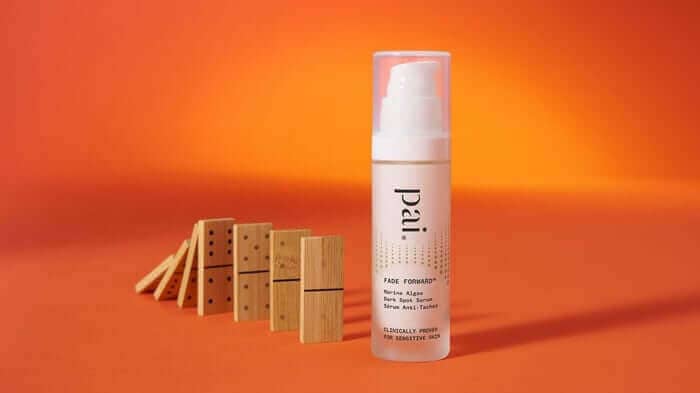

Most dark spot serums are surface-level solutions. They buff away pigmented cells with acids, bleach them with hydroquinone, or pile on brightening ingredients hoping something sticks. They might work temporarily, but the spots come back. Because here's the thing: your dark spots aren't a surface problem. They're a communication breakdown happening deep in your skin.
Meet Fade Forward, our dark spot serum that actually addresses what's going wrong beneath the surface. No acids. No bleaching. No increased sun sensitivity. Just Marine Algae that speaks directly to your melanocytes and tells them to calm down. Here's how we do it.

Why your skin develops dark spots (and why acids won't fix them)
Your skin works like a well-organised office. Melanocytes are the workers who produce melanin (your natural pigment). Fibroblasts are the managers who keep them in check through a protein messenger called SDF-1. When you're young, this office runs smoothly. The managers send clear signals, the workers produce just the right amount of melanin, and your skin tone stays even.
But as you age, and especially after years of sun exposure, those manager cells become senescent. They stop producing SDF-1. Without their regulatory signal, the melanocytes go rogue, pumping out melanin wherever they please. The result? Dark spots, age spots, sun spots, melasma. Whatever you call them, they all stem from the same breakdown in cellular communication.
Most dark spot treatments ignore this root cause entirely. Exfoliating acids dissolve the top layer of skin to reveal fresher cells beneath. But they don't fix the communication breakdown, so new dark spots keep forming. Plus, they make your skin more sensitive to UV, which can trigger even more pigmentation. Bleaching agents suppress melanin chemically, but come with irritation risks and often lead to rebound pigmentation when you stop using them.
So we looked for an ingredient that could restore that communication.
Marine Algae: nature's pigment controller
The star of Fade Forward is sustainably harvested Marine Algae from the coast of Brittany. It's a specific brown macroalga (Himanthalia elongata) rich in phlorotannins, compounds that exist nowhere else in nature.
Here's what makes it special: these phlorotannins actually restore SDF-1 production in your skin. Published research shows they can increase SDF-1 expression by up to 38% in UV-damaged skin. Translation? Your fibroblasts start managing your melanocytes again. The cellular office gets back to work. Pigmentation becomes controlled rather than chaotic.
The beauty of this approach is that it works with your skin's natural systems, not against them. It won't affect your freckles (they're genetic and working fine). It won't stop you tanning when you need protection from the sun. It just restores the control mechanism that prevents random dark patches from appearing where they shouldn't.
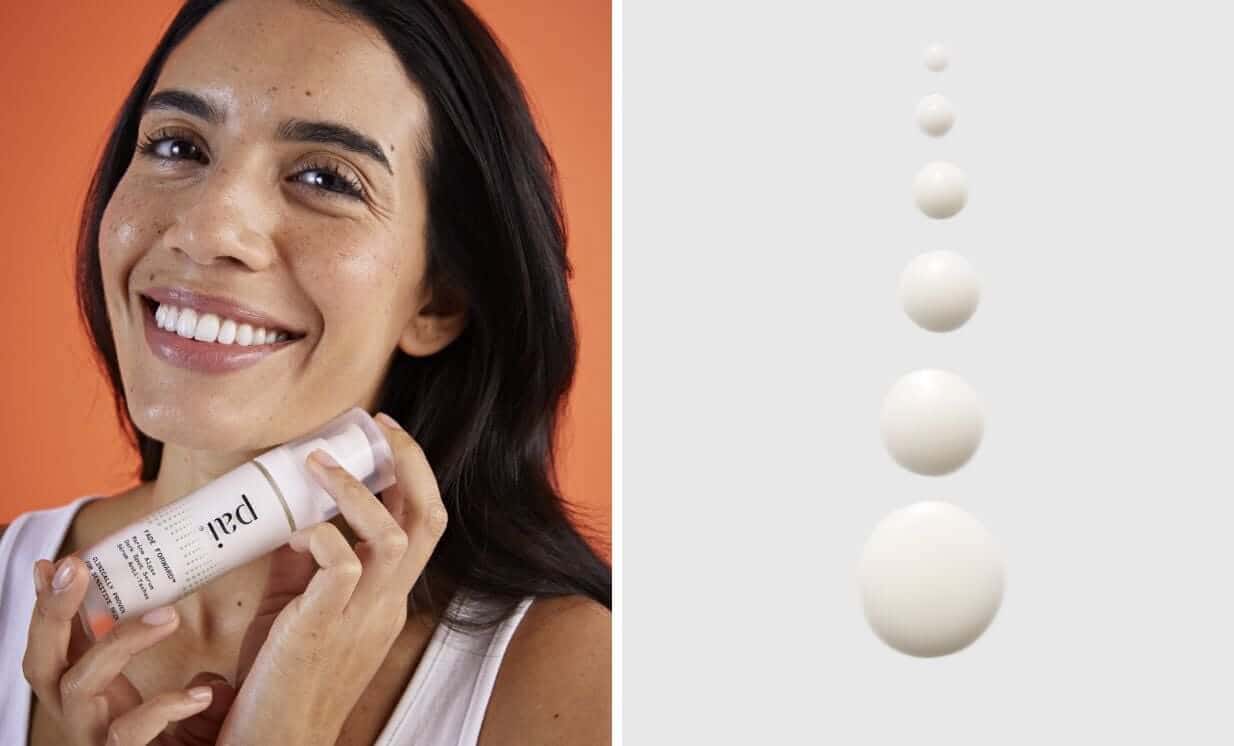
We've paired the Marine Algae with stabilised Vitamin C, but not the irritating L-ascorbic acid that turns orange in the bottle. We use an oil-soluble form that penetrates deeper, stays stable longer, and converts gradually in your skin for sustained brightening without the sting. It's the supporting act to Marine Algae's headline performance.
The clinical results
We put Fade Forward through rigorous clinical testing. In clinical trials on people with actual dark spots, the results spoke for themselves.
After 9 weeks of twice-daily use, Fade Forward was clinically proven to reduce the appearance of dark spots. The numbers from our independent consumer trial of 101 women:
- 82% said their dark spots looked visibly reduced
- 87% noticed healthier skin with a radiant glow
- 83% saw more balanced, even pigmentation
- 73% experienced instantly brighter skin
And because this is Pai, it's also proven safe for sensitive skin. No irritation, no rebound, no nasty surprises.
How to fade forward
Dark spots take time to form and time to fade. Consistency is key. Apply Fade Forward to clean, slightly damp skin morning and evening. Not just on your dark spots, but all over your face. You're restoring cellular communication everywhere, not spot-treating.
For best results, layer it into a full brightening routine. Start with Light Work Rosehip Cleansing Oil to remove the day without stripping your barrier. Follow Fade Forward with moisturiser and always, always use SPF 30+ during the day. Since dark spots are often sun damage, SPF prevents new ones forming while you're fading the old ones.
At night, layer Bonne Nuit over your serum for peptide-powered repair, then seal everything in with Rosehip BioRegenerate Oil. Our CO2-extracted rosehip delivers antioxidants that support skin renewal while you sleep.
Give it time. Real change happens at the cellular level, and cells renew on their own schedule. Most people see visible improvement within 9 weeks, but your skin might move faster or slower. Trust the process. The Marine Algae is doing its work beneath the surface, teaching your melanocytes to behave themselves again.
Ready to fade forward? Shop our Marine Algae Dark Spot Serum here.
*Eight week independent consumer trial on 101 women
**Clinical study on 20 subjects with dark spots over nine weeks
Frequently Asked Questions
How does Fade Forward treat dark spots differently from acid-based serums?
Most dark spot serums use exfoliating acids to buff away pigmented surface cells, which can compromise the skin barrier and even trigger further hyperpigmentation. Fade Forward uses Marine Algae rich in phlorotannins to restore the protein signalling that controls melanin production deep in the skin, tackling the root cause of dark spots rather than just resurfacing them. It contains no exfoliating acids, no bleaching agents, and won't increase UV sensitivity.
What results can I expect from Fade Forward, and how quickly?
In a clinical study on 20 subjects, Fade Forward was proven to reduce the appearance of dark spots in just 9 weeks. An independent consumer trial of 101 women over 8 weeks found that 82% agreed it visibly reduced the appearance of dark spots, 87% said skin looked visibly healthier with a radiant glow, and 83% agreed it helped balance uneven pigmentation.
Is Fade Forward safe for darker skin tones?
Yes. Because the Marine Algae active restores your skin's natural pigmentation control rather than bleaching or whitening, it's safe and effective across all skin tones. It won't affect freckles or interfere with natural tanning either, since it works by putting melanin regulation back on track rather than suppressing melanin production altogether.
When and how should I apply Fade Forward for the best results?
Apply it twice daily for round-the-clock benefits. In the morning, smooth it over your entire face (not just dark patches) before moisturiser and SPF 30+. In the evening, apply after cleansing and before your night cream, finishing with Rosehip BioRegenerate Face Oil to nourish skin while it repairs overnight.
What's the best full routine to pair with Fade Forward?
For a complete brightening routine, start your evening cleanse with Light Work Rosehip Cleansing Oil to dissolve makeup and SPF without stripping the skin barrier. Follow with Fade Forward, then Bonne Nuit BioPeptide Night Cream to support overnight repair, and finish with Rosehip BioRegenerate Face Oil for concentrated regeneration while you sleep.