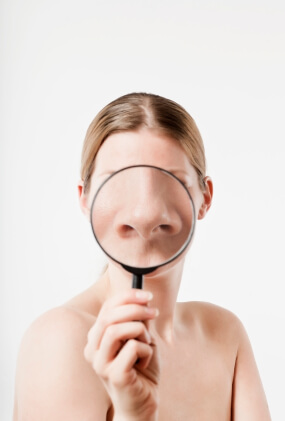

Most of us can identify fifteen different shades of concealer but couldn't name the actual spot we're concealing. Knowing your papules from your pustules actually matters. Different types need different treatment. Using the same spot cream on everything rarely works.
Dermatologists recognise six distinct types of spots. You might get one type, or several appearing simultaneously. Knowing which is which is the first step to effective treatment.
The Non-Inflammatory Duo: Blackheads and Whiteheads
These are the mildest forms of acne. No inflammation, no angry redness, just blocked pores doing their thing.
Whiteheads (Closed Comedones)
Small white bumps that sit just under the skin's surface. Your pore is completely blocked with sebum and dead skin cells, sealed by a thin layer of skin. They're stubborn but generally painless.
Blackheads (Open Comedones)
The same blockage as whiteheads, but the pore stays open at the surface. That dark colour isn't dirt (despite what every advert from the '90s told you). It's the sebum oxidising when it meets air, like an apple turning brown. They can be raised or flush with your skin.
Both respond well to gentle chemical exfoliation. Our guide to BHAs explains how salicylic acid dissolves the plug from inside the pore.
When Things Get Inflammatory: Papules and Pustules
This is where your immune system gets involved. The blocked pore's walls start breaking down, white blood cells rush in, and suddenly you've got inflammation.
Papules
Small, raised red bumps that feel tender when touched. No white head, no yellow centre, just angry red inflammation. The follicle wall has ruptured, spilling its contents into surrounding tissue. Your immune system responds with inflammation.
Pustules
The classic spot. Red, raised, with a white or yellow head of pus at the centre. Often a papule's next evolution after a few days (or immediately if you've been picking). That pus is dead white blood cells that responded to bacterial infection.
Both need calming as much as clearing. Our Anthemis Calming Daily Moisturiser contains CO2-extracted German chamomile specifically chosen for its anti-inflammatory bisabolol content.
The Deep Troublemakers: Nodules and Cysts
These are the most severe and potentially scarring forms. Deep, painful, and potentially scarring if not handled properly.
Nodules
Large, hard lumps deep beneath the skin's surface. Painful to touch and can last weeks. The follicle wall has completely collapsed, causing severe inflammation deep in the dermis. The skin above might look normal or slightly red, but severe inflammation is occurring beneath.
Cystic Acne
Similar depth to nodules but softer and filled with pus. Deep inflammation creates a pus-filled cavity that can rupture and spread infection to nearby follicles. High scarring risk, especially if squeezed.
Both nodular and cystic acne need professional help. A dermatologist might prescribe isotretinoin or other prescription treatments we can't replicate in a bottle. What we can do: support your skin barrier while you're on those treatments.
Identifying Your Type: A Quick Guide
Use this checklist to identify your spot type:
Surface level or deep? Blackheads and whiteheads sit at pore level. Everything else goes deeper.
Painful or painless? Non-inflammatory types (blackheads, whiteheads) don't hurt. Once inflammation kicks in, so does tenderness.
Head or no head? Whiteheads have a white cap under skin. Blackheads are open and dark. Papules have no head. Pustules have an obvious white/yellow centre. Nodules and cysts are too deep to form a proper head.
How long does it last? Surface spots clear in days to a week. Deep cysts can lurk for months.
The Treatment Strategy That Actually Works
Individual spot treatments aren't the most effective approach. The most effective approach treats the whole ecosystem of your skin, not individual invaders.
For blackheads and whiteheads: Regular, gentle exfoliation to keep pores clear. Chemical exfoliants work better than physical scrubs, which can spread bacteria.
For inflammatory acne: Calm first, clear second. Anti-inflammatory ingredients reduce redness and pain while your skin heals. Our Light Fantastic Brightening Face Oil combines bakuchiol (a natural retinol alternative) with sea buckthorn to address both inflammation and post-spot marks.
For deep cystic acne: Professional treatment plus barrier support. While prescription medications do the heavy lifting, focus on hydration and barrier repair to counteract their drying effects.
The Bigger Picture
Spots rarely arrive alone. Hormones, stress, diet, and genetics all play supporting roles. Our complete guide to adult acne covers the systemic factors. But knowing exactly what type of spot you're dealing with means you can choose products and treatments that actually target the problem.
One size doesn't fit all spots. Now you know the difference.