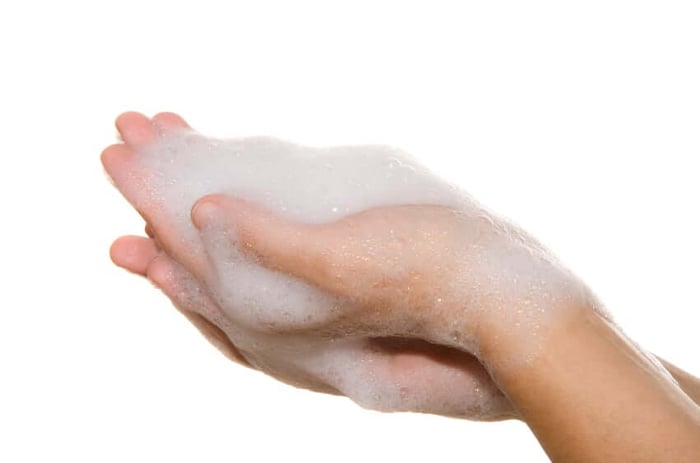
Sulphates. Foaming agents. Those cleaning workhorses that create the satisfying lather we've been trained to associate with cleanliness. They're in toothpaste, shampoo, soap, face wash, and probably half the bottles under your bathroom sink. But here's the thing about sulphates and sensitive skin: they're fundamentally incompatible.
The two most common culprits? Sodium lauryl sulphate (SLS) and sodium laureth sulphate (SLES). You'll find them on ingredient lists everywhere. And while they're incredibly efficient at what they do (creating foam, cutting through oil, leaving that squeaky-clean feeling), they're doing it at the expense of your skin's natural defences.
The acid mantle: your skin's invisible shield
To understand why sulphates are problematic, you need to know about your acid mantle. This finely tuned layer of natural oils and slightly acidic secretions sits on your skin's surface, forming a highly ordered structure that keeps moisture in and irritants out.
Think of it as your skin's bouncer. It maintains order, decides what gets in and what stays out, and keeps everything running smoothly. The skin's naturally acidic pH balance hovers around 5.5, creating an environment where beneficial bacteria thrive and harmful ones struggle.
A good cleanser respects this system. It removes excess oil, dirt, and the day's accumulation without dismantling the whole operation. Sulphates? They're the equivalent of firing the bouncer and leaving the doors wide open.
How sulphates sabotage your skin
Sulphates are surfactants, which means they're designed to break down oil and lift it away. The problem is they can't distinguish between the oil that needs to go (excess sebum, that grimy film from pollution) and the oil that needs to stay (your protective acid mantle).
SLS strips natural oils from the skin, and it does it thoroughly. Detergents are skin irritants affecting keratinocytes, the cells that make up 90% of your epidermis. When exposed to SLS, the expression was >50% above than in control areas. An increased and altered immunofluorescence pattern of involucrin, transglutaminase 1, and filaggrin was also found. In plain English? Your skin cells go into panic mode, trying to compensate for the assault.
But it gets worse. The pH of the alkaline salt is 7.0-9.5 (for a 1% w/v aqueous solution). When you wash with a sulphate-based cleanser, you're temporarily pushing your skin's pH from its happy acidic state into alkaline territory. This has been attributed to the elevation of stratum corneum pH; a sustained increase in pH enhances the activity of degradatory proteases and decreases the activity of the lipid synthesis enzymes.
Translation: your skin's repair mechanisms slow down while the breakdown processes speed up. It's the worst possible combination.
The cascade effect: when one problem triggers ten more
Strip away the acid mantle and you don't just get dry skin. You get a cascade of issues:
Increased sensitivity: Without its protective barrier, skin reacts to things it would normally ignore. That moisturiser that never bothered you? Suddenly it stings.
Bacterial imbalance: The relative abundance of taxa containing potential pathogens increase (Firmicutes: Staphylococcaceae; Proteobacteria: Enterobacteriaceae, Pantoea) while some of the most occurring Actinobacteria with valuable skin protection and repair capacities decreased (Micrococcus, Kocuria, and Corynebacterium). Your skin's microbiome gets thrown into chaos.
Moisture loss: The mean TEWL value was 5.1 ± 2.3 g m−2 h−1 at baseline while 42.6 ± 6.8 g m−2 h−1 one day after the SLS patch removal. That's an eight-fold increase in water escaping from your skin.
Compromised healing: SLS-induced skin barrier defects induce altered mRNA expression of keratinocyte differentiation markers and enzymes degrading corneodesmosomes. Your skin literally forgets how to function properly.
Why sensitive skin suffers most
If you have sensitive skin, rosacea, eczema, or any inflammatory skin condition, sulphates aren't just harsh, they're actively counterproductive. The most direct connection of the enhanced adverse reactions by SLS in disrupted skin barrier has been shown by Cowley and Farr who reported a dose-response study of irritant reactions to SLS in patients with seborrhoeic dermatitis and atopic eczema.
Your skin is already working overtime to maintain its barrier. Adding sulphates to the mix is like asking someone with a sprained ankle to run a marathon. It's not going to end well.
The Pai approach: clean without compromise
This is why every Pai cleanser is sulphate-free. We use gentle, plant-derived cleansing agents that respect your skin's natural balance. Our Middlemist Seven Cream Cleanser relies on organic oils to dissolve makeup and impurities, working with your skin rather than against it. For those who prefer a gel texture, our Light Work Rosehip Cleansing Gel uses mild coconut-derived surfactants that cleanse without stripping.
The result? Skin that's genuinely clean but still has its defences intact. No tightness, no irritation, no cascade of problems to fix later with ten other products.
Because here's what we know after 15 years of formulating for sensitive skin: the best cleanse isn't the one that strips everything away. It's the one that takes only what needs to go and leaves everything else exactly where nature intended.
Making the switch
If you've been using sulphate-based cleansers, your skin might need a few days to adjust when you switch. That tight feeling you're used to? That's not clean, that's compromised. Real clean feels soft, comfortable, balanced.
Give your skin a week with sulphate-free cleansing. Let your acid mantle rebuild. Watch as redness calms, sensitivity decreases, and that constant cycle of dryness followed by oiliness starts to even out.
Your skin knows how to be healthy. It just needs you to stop sabotaging its efforts with harsh detergents. Sometimes the most powerful thing you can do for your skin is simply to stop doing the things that hurt it.
Ready to experience the difference? Browse our full range of sulphate-free cleansers and find the perfect match for your skin. Because clean shouldn't come at the cost of comfort.