
PDRN is the skincare ingredient everyone is talking about right now. Keen to figure out what it actually does for skin? We’ve broken down how it works, what the results show, and where our new Age Confidence™ PDRN Revival Moisturiser fits in.
Overview
PDRN for skin comes down to three things: firmness, hydration and barrier resilience. It's one of the fastest-growing ingredients in skincare, with searches up over 600% in the past year. Its benefits also build with consistent use rather than showing up overnight. PDRN works by signalling skin cells to repair, renew, and produce more collagen, and, as with most actives, how well it's formulated matters.
Originally used in wound healing, then as an injectable in aesthetic clinics, PDRN is now available in topical formats you can use at home.
What Is PDRN, Exactly?
PDRN, short for polydeoxyribonucleotide, is a purified extract of DNA fragments, essentially the building blocks of DNA. It has been used clinically since the 1970s to speed up wound healing. It moved into aesthetics because those same fragments turned out to be brilliant at signalling skin cells to behave like younger, more resilient ones. Think of it as a wake-up call for tired skin.
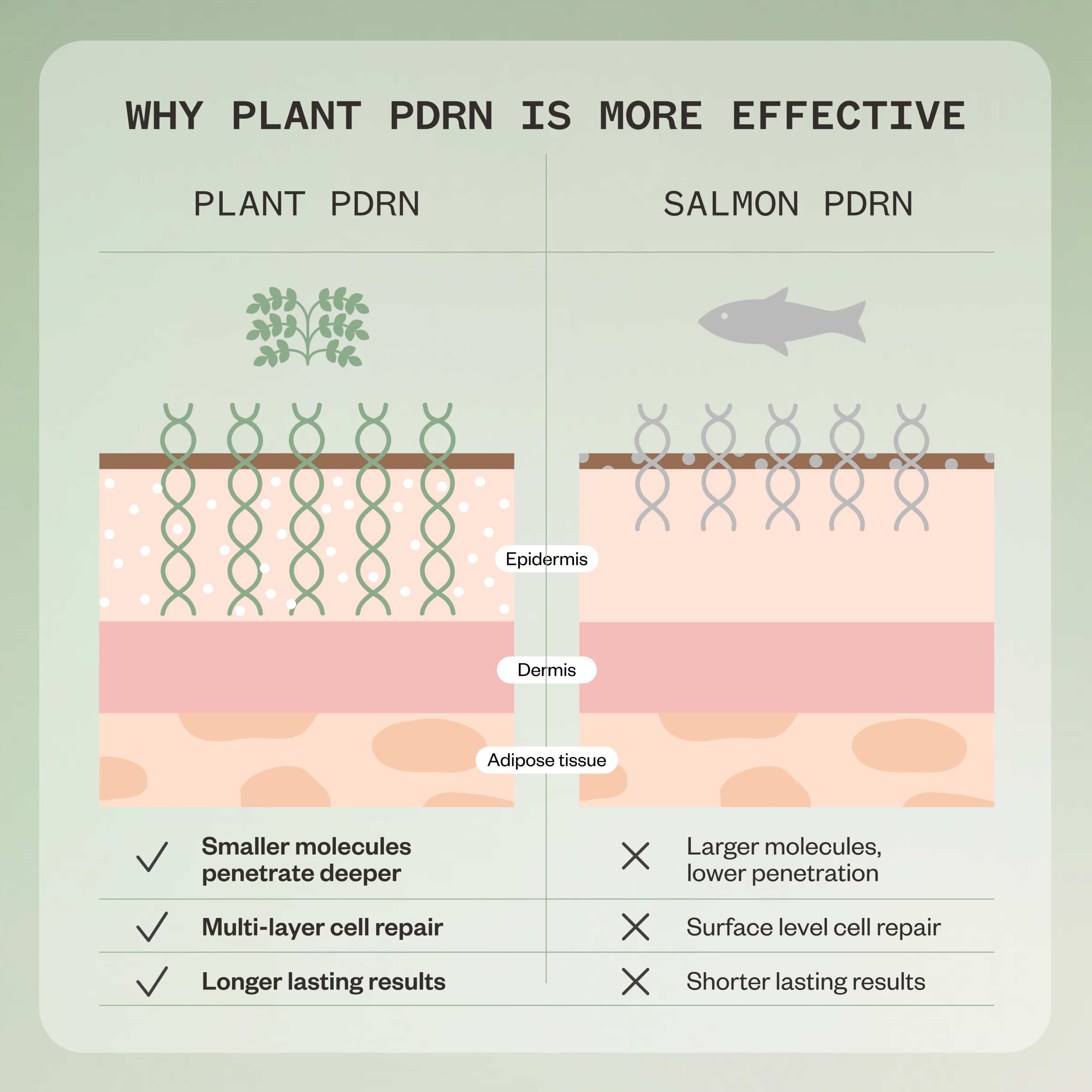
Traditionally, PDRN has been sourced from salmon or trout milt (yes, often called salmon sperm). Newer versions, like ours, are extracted from plants such as barley sprouts.
How does PDRN work on the skin?
PDRN binds to adenosine A2A receptors on skin cells, which switches on the cell's own repair pathways. In practice, fibroblasts (the cells that produce collagen and elastin) are prompted to ramp up production, cell turnover speeds up, and the skin barrier gets stronger.
Good to know: Topical PDRN isn't the same as the injectable kind. Injectables are given in-clinic and deliver the active deeper in a single session. Topical PDRN is made for daily use at home and relies on smaller fragments that work at the skin's surface. They're different routes to the same goal: healthy, resilient skin.
What Are the Main PDRN Benefits?
There are four benefit clusters worth knowing about. Here's how they stack up.
| Benefit | What PDRN does | What our trials showed |
|---|---|---|
| Firmness & lift | Prompts fibroblasts to make more collagen and elastin | Clinically proven to firm* skin and increase elasticity** |
| Hydration & texture | Supports moisture and smoother-looking skin | 92% of 104 women felt visibly more hydrated within moments of first use |
| Barrier resilience | Strengthens the skin's protective barrier | Clinically proven for sensitive skin, patch tested for 96 hours |
| Fine lines | Softens the look of lines with consistent use | 100% improvement in fine lines* |
Is PDRN safe for sensitive skin?
Topical PDRN carries a much lower irritation risk than injectables and is generally well tolerated. As with everything Pai makes, the PDRN Revival Moisturiser has been clinically proven for sensitive skin and patch tested for 96 hours, four times the industry standard. It's also COSMOS Natural certified, for total peace of mind.
Salmon PDRN vs plant-based (vegan) PDRN
Both deliver the same active molecule. The difference is where it comes from: salmon or trout DNA, or, in our case, expertly extracted plants like barley sprouts. Advances in green chemistry are what make vegan PDRN possible.
How does PDRN compare to other actives?
PDRN is often discussed alongside retinol and peptides, since all three target visible ageing – though through different mechanisms. If you already use retinol and are wondering whether PDRN is a gentler alternative, see PDRN vs Retinol: Which Is Better for Sensitive, Ageing Skin? For how PDRN and peptides work together, see our guide to peptides in skincare.
How to use PDRN in your routine
Apply topical PDRN (like our PDRN Revival Moisturiser) each morning, after water-based serums and before SPF. It layers well with hyaluronic acid, niacinamide and peptides. For a full step-by-step routine including what to avoid combining it with, read our blog on How to Add PDRN Into Your Skincare Routine here.
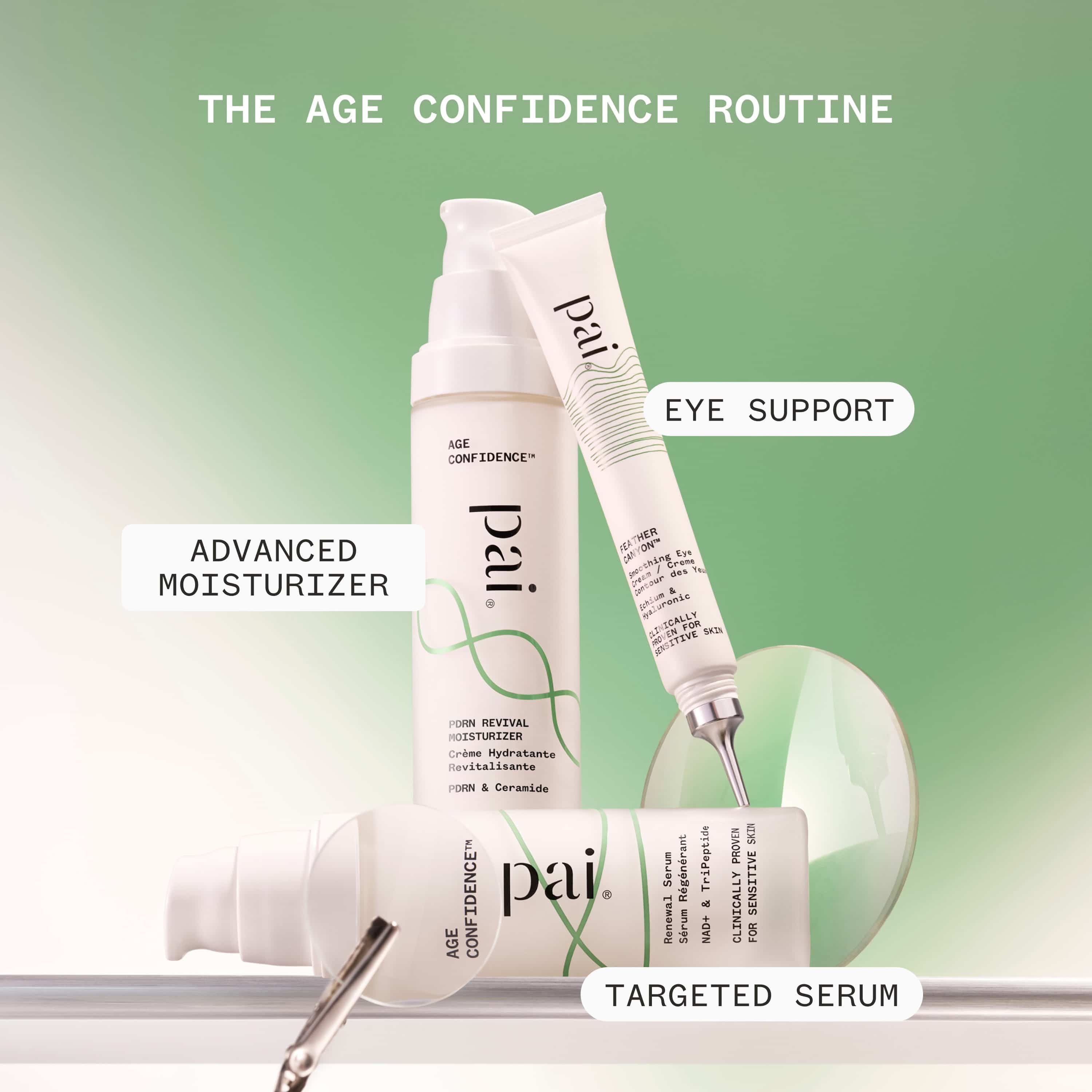
Ready to see the age-defying benefits of PDRN for yourself? Our clinically proven PDRN Revival Moisturiser is here.
FAQs
How long does it take to see results from PDRN?
Initial hydration is often visible immediately – in our independent trial of 104 women 92% felt visibly more hydrated within moments of first use. As with all cellular changes, firmness and texture improvements typically build from 2-4 weeks of consistent use. Our moisturiser is proven to firm, lift and revitalise skin in 28 days.
Can I use PDRN with Retinol or Vitamin C?
Generally yes. PDRN works through a different pathway to both, so there's no direct conflict. We always recommend introducing new active ingredients one at a time to give your skin a chance to adjust.
Is PDRN vegan?
Not always. Traditional (injectable) PDRN is sourced from salmon or trout DNA. Plant-derived, vegan versions like ours now exist thanks to major advances in green chemistry. See our vegan vs salmon PDRN comparison for more.
Is topical PDRN the same as injectable PDRN?
No. Injectable PDRN is administered in-clinic and delivers the active deeper into the skin in a single session. Topical PDRN is designed for daily home use and relies on smaller molecule fragments to penetrate the skin's surface. Though different, both are designed to improve the health and revitalise mature skin, and both play an important role in skin longevity.
Is PDRN safe to use every day?
Yes, our new PDRN moisturiser is formulated for daily use and comfort, unlike injectable PDRN which is typically done as an in-clinic course and may require some downtime.
*4 week independent clinical trial on 31 women
** 8 week independent clinical trial of 31 women