
Let me tell you something I learned after reviewing the twelfth celebrity's "secret" to glowing skin. It's never the £300 serum. It's the bit where they massage their face for three minutes every evening. Skincare isn't just what you put on. It's how you put it on.
That's where gua sha comes in.
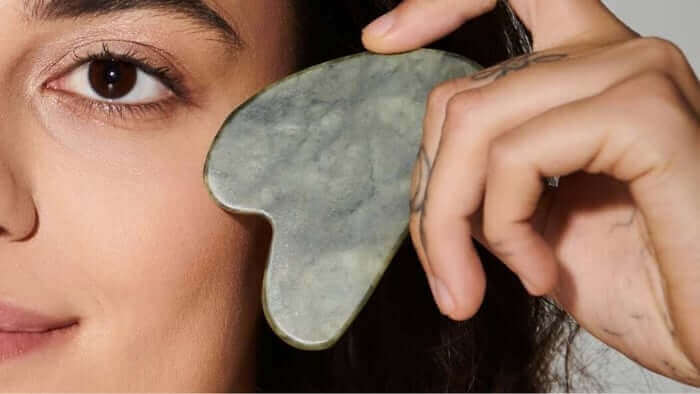
This jade or rose quartz tool that's taken over your Instagram feed? The one that looks like a small, smooth axe? It's been draining puffiness and sculpting cheekbones for about 2,000 years. The technique originated in Chinese and Southeast Asian medicine, where practitioners would scrape the skin to improve circulation and release tension. (They were considerably less gentle than we are now.)
What gua sha massage actually does to your skin
Here's what happens when you glide that cool stone across your face. First, you're manually encouraging lymphatic drainage. Your lymph system doesn't have a pump like your circulatory system does. It relies on movement. When lymph fluid sits stagnant, you get that morning puffiness we all know too well. Gua sha gets it moving again.
The pressure and motion also boost blood flow to the skin's surface. More blood means more oxygen and nutrients reaching your skin cells. That's the glow everyone's after.
Regular gua sha practice can:
- Reduce puffiness by supporting your lymphatic system
- Improve circulation for brighter, more radiant skin
- Soften the appearance of fine lines through increased blood flow
- Help your skincare penetrate deeper (more on this in a moment)
- Release facial tension you didn't know you were holding
The stones themselves come in different materials. Jade stays cool longest. Rose quartz feels softer on sensitive skin. Aventurine is particularly soothing and happens to be what we chose for ours. Stainless steel versions work too, though they lack the ritual element that makes this feel less like a chore and more like five minutes of actual self-care.
The right way to use your gua sha (and the wrong way)
Never use gua sha on dry skin. Ever. You'll drag, pull, and potentially damage the very skin you're trying to improve. The stone needs to glide, not grip.
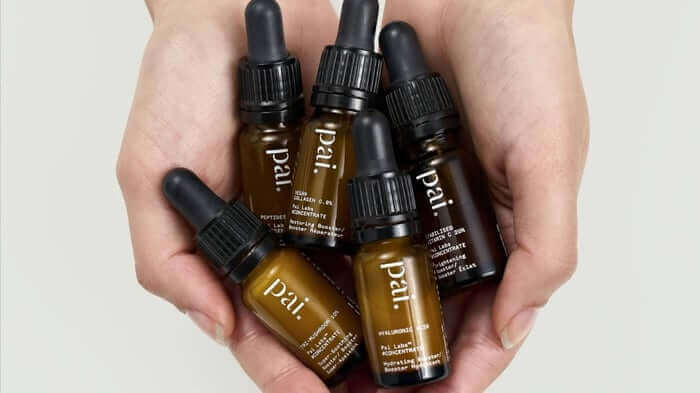
Start with clean skin and apply your serum, face oil, or moisturiser. You want something with slip. Our Rosehip Bioregenerate works particularly well. The oil provides the perfect amount of glide, plus you get the regenerating benefits of CO2-extracted rosehip while you massage. Two birds, one beautifully smooth stone.
Hold the curved edge against your skin at a 15-degree angle. Too flat and it won't work. Too steep and you'll bruise. Start at the centre of your face and sweep outwards and upwards. Always.
Your step-by-step routine
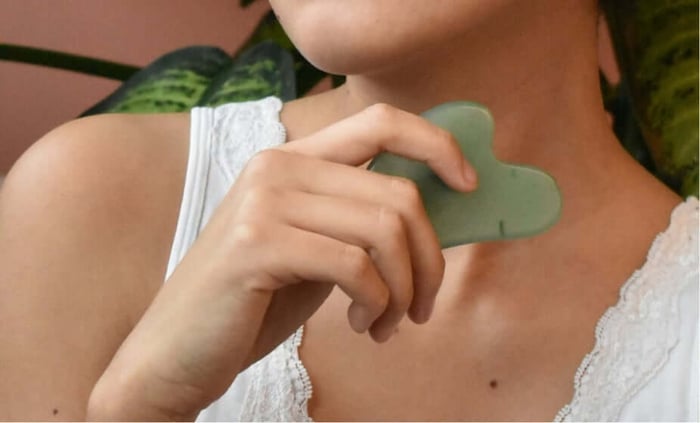
Begin with your neck. Sweep from the centre outwards, then from your collarbone up to your jaw. This opens the drainage pathways for everything that follows.
Move to your jawline and chin. Place the notched edge of the gua sha at the centre of your chin and glide along your jaw towards your ear. The pressure should be firm but comfortable. Think of it as moving fluid, not ironing out wrinkles.
For your cheeks, anchor the skin beside your nose with one hand. With the other, sweep the gua sha from your nose, under the cheekbone, out towards your ear. This is where you'll see the most dramatic depuffing.
The eye area needs a completely different approach. The skin here is tissue-thin. Use the smallest curve of your gua sha with almost no pressure. Glide from the inner corner of your eye, following the orbital bone, out to your temple. Never drag downwards here.
For your forehead, work in sections. Start between your eyebrows and sweep up to your hairline. Then work outwards, always moving up and out towards your temples. When you reach your hairline or temple at the end of any stroke, pause and give a gentle wiggle. This helps release tension.
Repeat each movement 3-5 times before moving to the next area. The whole routine takes about five minutes. Less if you're rushed, more if you're really going for it.
Common mistakes (and how to avoid them)
Going too fast defeats the purpose. This isn't a race. Slow, intentional movements work better than quick swipes.
Pressing too hard is another classic error. You're encouraging drainage, not trying to restructure your face. Medium pressure is plenty.
Forgetting to clean your gua sha means you're spreading yesterday's bacteria around today's clean face. Wash it with warm soapy water after each use. Store it with your cleanser as a reminder.
Only doing it once won't show results. Like most skincare techniques, consistency matters more than perfection. Three times a week minimum if you want to see a difference.
Why gua sha works so well with face oils
The combination of gua sha massage and a good face oil is particularly effective. The massage helps the oil penetrate deeper into your skin rather than sitting on the surface. You're essentially giving yourself a mini facial with every use.
The mechanical action of the massage also helps break up any congestion in your pores, allowing the oil's active ingredients to work more effectively. This is why many people report their skincare suddenly "working better" once they start gua sha. Same products, better delivery method.
Making it a habit
The best skincare tool is the one you'll actually use. Keep your gua sha somewhere visible. Next to your face oil is ideal. Build it into your existing routine rather than treating it as an extra step.
Evening works best for most people. You have more time, and the lymphatic drainage can work overnight while you sleep. But morning gua sha sessions are brilliant for depuffing before an important day.
Start with just your jawline if five minutes feels too long. Once you see the difference (usually within a week), you'll find the time for the full routine.
The right oil makes all the difference to how the stone glides and how your skin feels afterwards.
Frequently Asked Questions
What are the main benefits of using a Gua Sha stone on your face?
Gua Sha facial massage supports lymphatic drainage to reduce puffiness, improves blood circulation for more radiant skin, and helps relax facial muscles and tension. It can also help reduce the appearance of fine lines and encourage skincare products to penetrate deeper into the skin for better results.
Should I apply products before using a Gua Sha tool?
Always. Using a Gua Sha on dry skin can cause irritation and drag, which defeats the purpose of the massage. Complete your cleansing routine first, then apply a serum, facial oil, or moisturiser to create a smooth, slippery base that lets the stone glide without pulling.
What's the best face oil to use with a Gua Sha stone?
A face oil with good slip works best, and Pai's Rosehip Bioregenerate Oil is ideal. It provides the smooth glide you need to prevent friction, while its concentrated carotenoids, polyphenols, and essential fatty acids deliver radiance-boosting and skin-regenerating benefits as you massage.
What is the correct technique for using a Gua Sha on different areas of the face?
Hold the curved side against your skin and glide with medium pressure along the jawline, then work from beside the nose up to the ears below the cheekbones. For the delicate eye area, use very gentle pressure rolling from the inner corner outward to the temples. Repeat each stroke about five times per area, and when you reach the hairline, press slightly firmer for a moment of tension relief.
How should I clean my Gua Sha stone, and how often?
Clean your Gua Sha before each use in warm soapy water. A good tip is to store it next to your cleanser so you remember to wash it when you're already at the sink for your skincare routine.