
Collagen is having a moment. Again. From TikTok's collagen smoothie obsession to the return of bone broth evangelists, everyone's convinced they need more of this structural protein. Walk into any Boots and you'll find shelves groaning with collagen creams, collagen serums, collagen gummies shaped like tiny bears.
But here's what the marketing doesn't tell you: most of what's being sold as "collagen skincare" isn't actually collagen at all. And the stuff that is? Those molecules are too big to penetrate your skin anyway.
So what can collagen really do for your skin, and why have we spent years perfecting a plant-based alternative that actually works better than the animal version? Let's separate the science from the marketing hype.
What collagen actually is and why you're losing it
Collagen is the most abundant protein in your body, making up about 75% of your skin's dry weight. Think of it as the scaffolding that keeps everything firm and bouncy. It's what gives young skin that plump, resilient quality that makes fine lines physically impossible.
Here's the problem: You start losing it from your mid-twenties. By 40, you're producing about 25% less than you were at 20. By 60, that drops to 50%. Sun exposure accelerates the decline (UV breaks down existing collagen faster than your body can replace it). So does smoking, stress, sugar, and basically everything fun.
Worse still: Once it's gone, it's remarkably hard to get back.
The collagen supplement situation
Most ingestible collagen comes from cow bones (bovine) or fish skin (marine). The theory goes: eat collagen, make collagen.
Your digestive system has other ideas. When you swallow collagen, your stomach breaks it down into amino acids, same as any other protein. Those amino acids get distributed throughout your body based on need. Your body might use them to repair muscle, produce enzymes, or yes, potentially make new collagen. But there's no GPS system directing them specifically to your laugh lines.
Some people swear by collagen supplements. Others see zero difference. The science is similarly split. What we do know is that collagen you eat doesn't automatically become collagen in your skin. Your body has other priorities.
Why topical collagen is (mostly) nonsense
The topical collagen situation is even more ridiculous. Even if a cream contains real collagen, those molecules are enormous. We're talking 300,000 Daltons. For context, skincare ingredients need to be under 500 Daltons to penetrate the skin barrier. It's like trying to push a sofa through a cat flap.
So what happens? That expensive collagen serum sits on top of your skin, maybe making it feel temporarily smoother, then washes off next time you cleanse. Sixty quid well spent.
This is why most "collagen" products are actually peptide products in disguise. Peptides are smaller amino acid chains that can penetrate skin and signal it to produce more of its own collagen. Clever, and actually effective, but not the same thing as topical collagen.
What plant-based collagen alternatives can actually do
Plant-based alternatives work differently. While traditional collagen can't penetrate skin, hydrolysed vegetable proteins can replicate collagen's surface benefits and, in some cases, do them better.
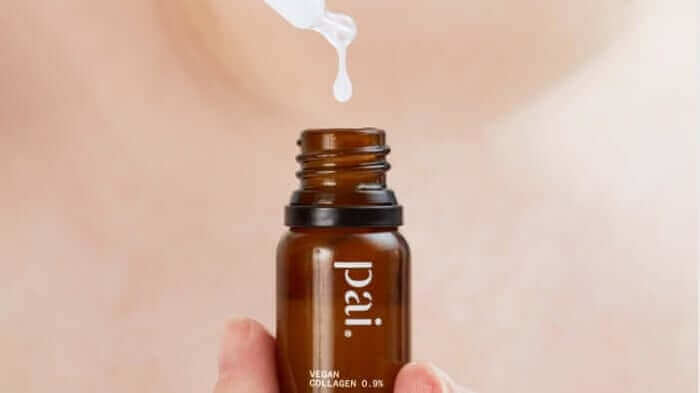
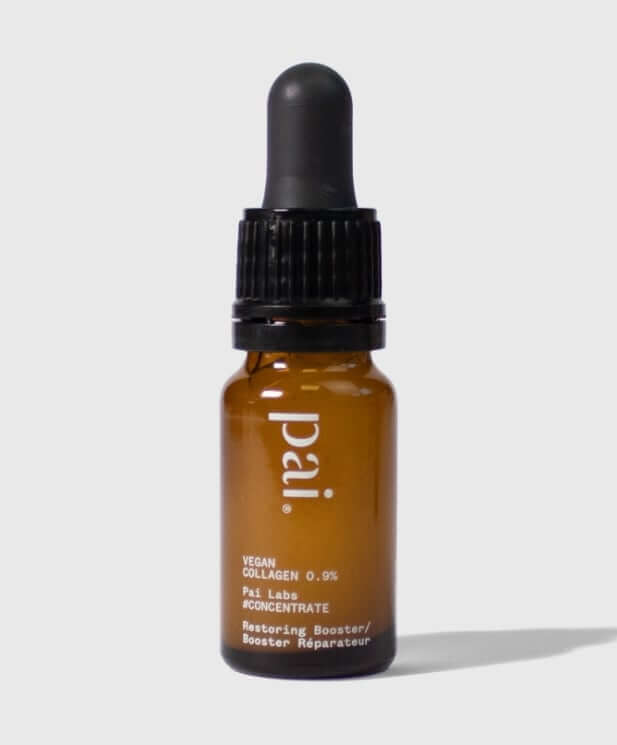
Our Vegan Collagen 0.9% Restoring Booster uses proteins derived from corn and soy that have been specifically engineered to mirror the amino acid composition of animal collagen. The surprising result: in equilibrium moisture testing, the plant version outperforms animal-derived collagen for moisture binding at normal humidity levels.
These proteins work by forming a protective film on your skin's surface. When applied, this breathable layer:
Locks in moisture
The protein film reduces transepidermal water loss, essentially putting a lid on your skin's hydration. Particularly useful if your barrier is compromised from weather, stress, or overzealous exfoliation.
Smooths texture instantly
By filling in micro-irregularities on the skin surface, you get that filtered effect in real life. The smoothing is immediate and visible, which is deeply satisfying when most skincare takes weeks to show results.
Acts as a humectant
The hydrolysed proteins actively draw moisture from the environment into your skin. It's hygroscopic, creating a water-binding matrix that keeps skin plump throughout the day.
Protects what you've got
While it won't add collagen to your dermis, the protective film shields your existing collagen from pollution and free radical damage. Prevention is easier than repair.
How to actually support your collagen (beyond wishful thinking)
If you want to maintain the collagen you have and encourage new production, you need a multi-pronged approach:
1. Vitamin C is non-negotiable
Your body literally cannot make collagen without vitamin C. It's a cofactor for the enzymes that crosslink collagen fibres. Our Stabilised Vitamin C 20% Booster uses ascorbyl tetraisopalmitate, which penetrates 10x better than regular vitamin C and stays active in skin cells 40-80x longer.
2. Peptides for signalling
While our Vegan Collagen works on the surface, peptides go deeper. They're small enough to penetrate and tell your fibroblasts to get back to work. Our Peptides 5% Smoothing Booster uses a copper peptide complex that stimulates both collagen and elastin synthesis.
3. SPF every single day
UV radiation is collagen's biggest enemy. It activates enzymes called MMPs that literally chew through your collagen matrix. Daily SPF isn't anti-ageing, it's anti-accelerated-ageing. British Summer Time protects without the chalky finish or irritation of traditional mineral sunscreens.
4. Manage the inflammation
Chronic inflammation accelerates collagen breakdown. If your skin is constantly irritated, red, or reactive, you're losing collagen faster than necessary. This is where our sensitive skin heritage becomes your advantage.
The reality check on collagen skincare
No topical product, ours included, is going to give you the collagen levels of a 20-year-old. That ship has sailed. What you can do is protect what you have, support your skin's own production, and use intelligent alternatives that deliver the surface benefits without the molecular size limitations.
Our Vegan Collagen Booster won't rebuild your dermis. But it will make your skin look and feel smoother, more hydrated, and more resilient. Sometimes that's enough. Actually, when it's backed by proper science and outperforms the animal-derived alternative, it's more than enough.
For the full collagen-supporting routine: Vegan Collagen in the morning for all-day moisture binding and protection, Peptides 5% at night to signal repair while you sleep. Add vitamin C for antioxidant protection and collagen synthesis support. Simple, evidence-based, effective.
Because at the end of the day, the best collagen strategy isn't about chasing what you've lost. It's about making the most of what you've got.
Shop our complete range of clinical-strength Boosters or discover more about how to customise your skincare routine with concentrated actives.
Frequently Asked Questions
Can topical collagen actually reduce wrinkles and plump the skin?
Not in the way you might hope. Collagen molecules are too large to penetrate the skin's surface, so applying them topically won't plump out lines the way cosmetic filler does. What topical collagen does brilliantly is condition the skin's surface, forming a breathable film that smooths over fine lines, locks in moisture, and creates a visibly more radiant finish.
What's the difference between ingestible and topical collagen for skin?
Ingestible collagen (supplements, drinks, sweets) is usually sourced from bovine or marine sources and aims to boost your body's overall collagen levels, though results are debated since your body uses collagen everywhere, not just in skin. Topical collagen works on the skin's surface to smooth, hydrate, and protect by forming a thin film that reduces moisture loss and conditions the complexion.
Is plant-derived collagen as effective as animal-derived collagen in skincare?
Supplier testing confirms that vegetable collagen actually outperforms animal-derived soluble collagen for moisture binding under normal humidity conditions (below 60%), which is what skin is exposed to in real life. Pai's Vegan Collagen 0.9% Restoring Booster uses hydrolyzed vegetable protein sourced from corn and soy, specifically engineered to replicate the amino acid composition and functional performance of traditional animal collagen.
How should I use the Pai Vegan Collagen Booster in my routine?
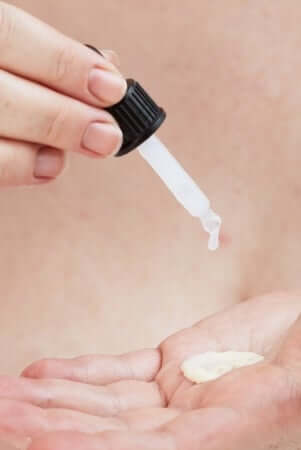
Add 1 to 2 drops to your moisturiser, or apply neat on clean, dry skin in between skincare steps. For best results, pair it with the Peptides 5% Smoothing Booster: use Vegan Collagen in the morning to enjoy its surface-smoothing glow, and Peptides at night to stimulate your skin's own collagen and elastin production while you sleep.
How does topical collagen protect the skin from environmental damage?
By forming a lightweight breathable film on the skin's surface, topical collagen helps shield against pollution-causing free radicals that would otherwise degrade your natural collagen production. It also reduces transepidermal water loss, keeping the skin's moisture barrier intact so the underlying structures stay better protected over time.