
NAD+ has entered the skincare conversation with unusual fanfare. Unlike most trendy ingredients that promise miracles and disappear within a season, this one comes with decades of cellular biology research and a Nobel Prize behind it. The shift from treating visible signs of ageing to maintaining cellular function represents a fundamental change in how we think about skin health.
The science is compelling: NAD+ (nicotinamide adenine dinucleotide) powers every process that keeps skin functioning. Without it, cells can't repair DNA, produce collagen, or maintain their barriers. And we lose approximately 50% of our NAD+ every 20 years.
Here's what the research actually shows about NAD+ for skin, how it works at a cellular level, and why our approach using sunflower sprout extract might be more effective than trying to apply NAD+ directly.
What is NAD+ and why does it matter?
NAD+ is a coenzyme found in every cell of your body. It's the currency of cellular energy, powering the processes that keep cells alive and functioning. In skin specifically, NAD+ fuels collagen production, DNA repair, barrier maintenance, and the cellular turnover that keeps skin looking fresh.
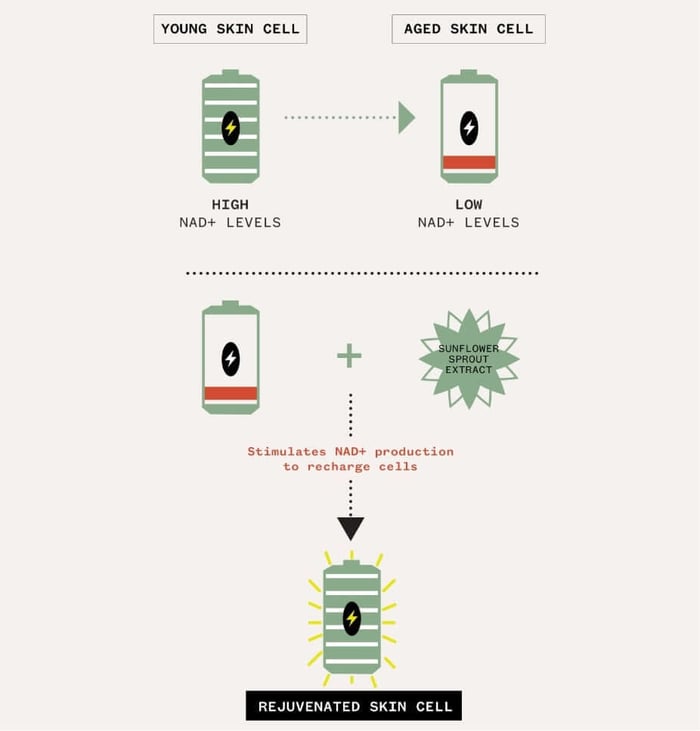
Think of it as your cells' rechargeable battery. When levels are high, everything runs efficiently. When they drop, cellular processes slow down. The visible result: dull skin, loss of firmness, fine lines, and a weakened barrier that can't protect itself properly.
The problem is that NAD+ levels decline significantly with age. Published research confirms we lose about half our NAD+ every two decades (PMC, 2022). This happens for two reasons: the CD38 enzyme becomes more active with age and destroys NAD+ faster, while chronic DNA damage means our repair systems consume more NAD+ just to keep up.
The cellular science of skin ageing
When NAD+ levels drop, fibroblasts (the cells that produce collagen) enter a state called senescence. They stop making collagen and elastin. Worse, they start secreting inflammatory compounds that damage surrounding cells, creating a cascade of ageing throughout the tissue.
Meanwhile, without adequate NAD+, DNA repair slows. UV damage accumulates. The barrier weakens because cells can't produce the lipids and proteins needed to maintain it. Cellular turnover drops from 28 days to 40 or more. Everything that makes skin look healthy depends on having enough cellular energy to power it.
This is why the longevity approach to skincare makes sense. Instead of trying to fix wrinkles after they appear, maintain the cellular energy that prevents them forming in the first place.
Benefits of NAD+ for skin health
Reduces fine lines and wrinkles
With sufficient NAD+, skin maintains its renewal cycle properly. Collagen production continues. The barrier stays intact. Published studies on NAD+ precursors show significant improvements in wrinkle depth and skin smoothness when cellular NAD+ levels are restored.
Strengthens barrier function
Your skin barrier needs constant maintenance. NAD+ powers the production of ceramides, fatty acids, and proteins that form this protective layer. A strong barrier means less moisture loss, less irritation, and better protection against environmental damage.
Improves hydration and elasticity
By maintaining barrier integrity, NAD+ helps reduce transepidermal water loss (TEWL). The energy it provides also supports elastin and collagen synthesis, keeping skin's structure firm and bouncy.
Protects against UV damage
NAD+ activates sirtuins and PARPs, the enzyme families that repair DNA damage and regulate cellular longevity. It also supports antioxidant activity. Skin with healthy NAD+ levels can both defend against UV damage and repair it more effectively when it occurs.
Natural ways to support NAD+ levels
Your body can produce NAD+ from dietary sources. Foods rich in niacin (vitamin B3) provide the raw materials: think salmon, chicken, mushrooms, and avocados. Niacin converts to compounds your cells use to generate NAD+.
Exercise also helps. Physical activity depletes NAD+ temporarily, which signals your body to produce more. Regular workouts can help maintain higher baseline levels.
Some opt for NAD+ supplements or IV therapies, though the evidence for skin-specific benefits from systemic supplementation is still developing. The most direct approach may be supporting NAD+ production in skin cells themselves.
The problem with topical NAD+
Here's where it gets interesting. NAD+ itself is a large, unstable molecule. It can't penetrate the skin barrier effectively and degrades quickly in formulations. Some brands use NAD+ precursors like NMN or NR, which are smaller and more stable, but still face absorption challenges.
We took a different approach. Instead of trying to deliver NAD+ through the skin barrier, why not help skin cells produce more of their own?
Our approach: NAD+ activation
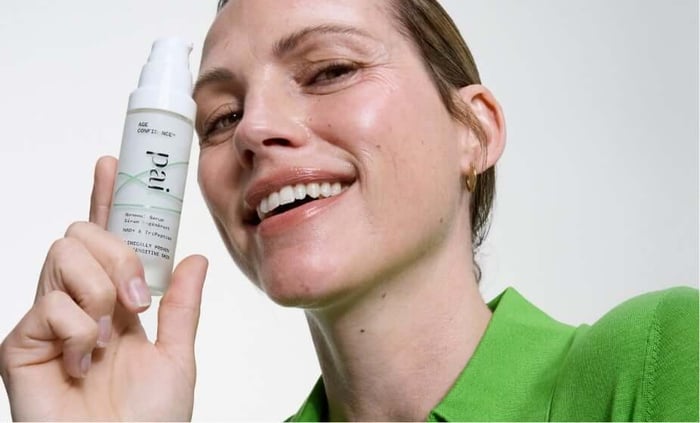
The Age Confidence NAD+ & TriPeptide Renewal Serum uses sunflower sprout extract to boost NAMPT, the enzyme that controls your skin's NAD+ recycling system. By increasing NAMPT activity, we help cells maintain their NAD+ levels naturally.
This biotech ingredient, derived from organic sunflower sprouts, works with your skin's existing biology rather than trying to force an external molecule through the barrier. Research shows that NAMPT activation can restore NAD+ to youthful levels, delaying cellular senescence and supporting all the processes that keep skin healthy (PMC, 2021).
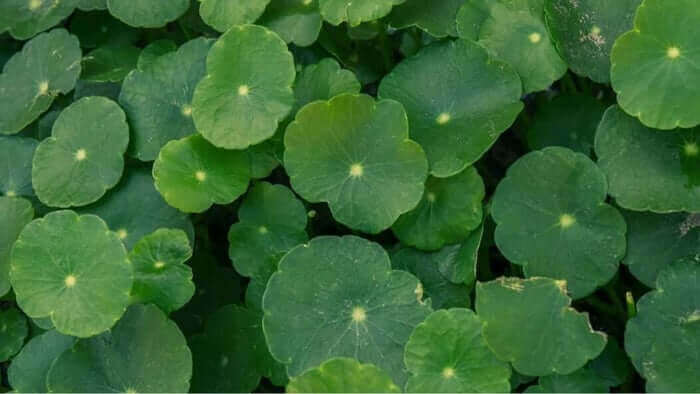
We've combined this with a biofermented TriPeptide complex. Acetyl Hexapeptide-8 targets expression lines. Glutathione provides antioxidant protection and helps even skin tone. Acetyl Tetrapeptide-5 improves microcirculation to reduce puffiness. Plus Centella Asiatica, rich in exosomes that deliver repair signals directly to cells.
The result? In clinical trials, we saw statistically significant improvements in wrinkle depth (9.45% reduction), firmness (11% improvement), and elasticity (9.92% improvement) after 8 weeks. 100% of subjects showed improved hydration.
Building your cellular energy routine
The NAD+ serum works brilliantly alone, but it's designed as part of our complete Age Confidence collection. Use it as your first treatment step after cleansing, morning and night. The lightweight gel absorbs quickly, creating the perfect base for moisturiser.
In the morning, follow with Salvation Jane Daily Moisturiser for antioxidant protection. At night, layer under Bonne Nuit Night Cream for intensive repair. For the delicate eye area, add Feather Canyon Eye Cream.
Shop the Age Confidence NAD+ & TriPeptide Renewal Serum
*Based on an eight-week independent clinical trial of 21 subjects under dermatological control and consumer trial of 100 subjects
Frequently Asked Questions
What does NAD+ do for your skin?
NAD+ helps your skin by supporting cellular repair, boosting collagen production, and protecting against oxidative stress. It plays a vital role in slowing visible signs of ageing and improving overall skin texture and resilience.Why does NAD+ matter for skin ageing?
NAD+ is a coenzyme in every cell that powers energy production, DNA repair, collagen synthesis, and barrier maintenance. Your body loses roughly 50% of its NAD+ every 20 years, so skin cells progressively run out of the fuel they need to renew and protect themselves, leading to fine lines, dullness, and loss of firmness.
Can you apply NAD+ directly to your skin?
Topical NAD+ isn't considered effective because the molecule is too large to penetrate the skin barrier and degrades quickly in formulations. Pai's Age Confidence NAD+ Serum takes a different approach, using Sunflower Sprout Extract to boost the NAMPT enzyme, which is the rate-limiting step in your skin's own NAD+ production pathway. This means your cells make more NAD+ themselves rather than relying on an external supply.
Can you apply NAD+ topically?
Yes, some skincare products contain NAD+ or its precursors like nicotinamide riboside (NR) or nicotinamide mononucleotide (NMN). Early studies suggest topical NAD+ may help improve skin hydration, firmness, and cell turnover but generally it’s not thought to be the best way to increase NAD+.
Instead, our serum uses Sunflower Sprout Extract, a NAD+ amplifier, which tells your skin to produce more – and our formula is proven to minimise the appearance of fine lines and boost firmness and elasticity.
What results can you expect from Pai's NAD+ Serum?
In a 21-subject clinical study, the serum delivered a 9.45% reduction in wrinkle depth, an 11% improvement in firmness, and a 17.95% boost in hydration over 56 days, all statistically significant. A separate 100-person consumer trial found 80% reported improved hydration and 75% saw improved plumpness after 8 weeks.
Is NAD+ skincare safe for sensitive skin?
Pai's Age Confidence NAD+ Serum is clinically proven for sensitive skin via a 96-hour human repeat insult patch test, and it's completely fragrance free. In the 100-person consumer trial, only 2 mild adverse events were reported across all subjects, both of which resolved, confirming an excellent tolerability profile.
Is NAD+ safe for all skin types?
Generally, NAD+ is considered safe when used as directed, especially in topical forms. Our NAD+ serum is also clinically proven for sensitive skin (as are all of our products) and fragrance free, for complete peace of mind.What’s the difference between NAD+, NMN, and NR in skincare?
NAD+ is the active coenzyme but it doesn’t always penetrate skin easily. NMN and NR are precursors that your body converts into NAD+ and are more commonly used in skincare and supplements. These forms help boost your skin’s natural NAD+ levels from within or topically.How can you boost NAD+ levels naturally through diet and exercise?
Foods rich in niacin (vitamin B3), such as salmon, chicken, mushrooms, and avocado, provide the building blocks your body converts into NAD+. Regular exercise also helps because your body responds to the increased energy demand by ramping up its own NAD+ production.