
We probably don’t need to tell you that there are a lot of acids in the skincare world. And while some, like Hyaluronic Acid or Polyglutamic Acid, are pretty low risk, exfoliating acids have more of a reputation for their fast results – and, less positively, a potential for irritation.
But as well as AHAs and BHAs, there is another exfoliating acid category you might have come across: PHAs. Lesser known? Perhaps. Less worth your time? Far from it. Here’s an overview of how they work – and why they are absolutely worthy of a place in your skincare routine.
What is PHA?
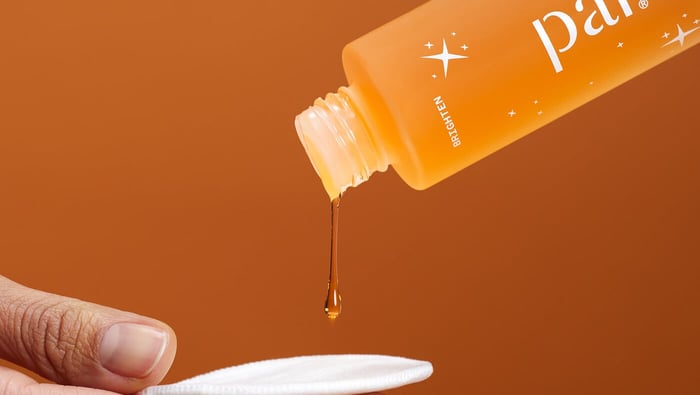
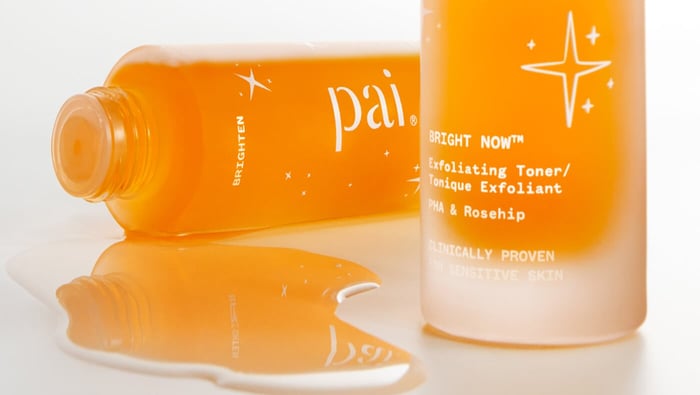
PHA stands for Polyhydroxy Acid. As we mentioned earlier, it’s an exfoliating ingredient, with examples including Lactobionic Acid and Gluconolactone. The latter just so happens to be one of the ingredients you’ll find in our latest launch, Bright Now™ Exfoliating Toner, alongside the first 100% natural Niacinamide and Rosehip. 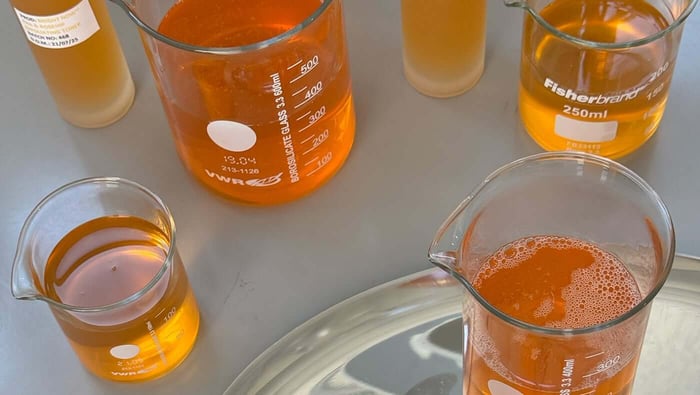
So how are PHAs different to AHAs and BHAs?
We’re glad you asked. Alpha Hydroxy Acids – AHAs like Malic, Lactic or Glycolic Acid – and Beta Hydroxy Acids – BHAs like Salicylic Acid – all have a much smaller molecule size. This means they can penetrate the skin more deeply. It’s why Glycolic, which has the smallest molecule size, is usually the most irritating of the bunch.
All this is precisely why our in-house chemists chose to use PHAs in Bright Now™. Skincare shouldn’t sting, and so we wanted our first acid exfoliant to get to work without dryness or drama – for a tingle-free toning experience. As our Head of R&D John puts it, “You get the resurfacing power of an acid without the stinging, redness or ‘purging’ often associated with deeper-penetrating exfoliants.”
And we proved it: when we put it to the test in a trial, 87% agreed that Bright Now™ didn’t dry out their skin*. Like all Pai products, it’s clinically proven for sensitive skin for your peace of mind. Below, we’ve recapped the key benefits of PHAs, AKA reasons to love them.
What are the benefits of PHAs?
Gentle-yet-effective exfoliation
Although PHAs are considered a gentler exfoliating acid, that doesn’t mean they’re any less effective. They work by dissolving the glue holding dead skin cells together and speeding up cell turnover (your skin’s production of new skin cells) – revealing fresh, new skin that’s smooth, clear and glowing.
Hydration
As well as their exfoliating benefits, Polyhydroxy Acids are also humectants, one of three key types of moisturising agent. “Acids can leave the skin feeling stripped or tight,” says John. “PHAs are natural humectants, meaning they draw water into the skin.” This helps to boost skin’s hydration levels. In other words, that tight post-exfoliation feeling? You won’t get that with Bright Now™.
Lower sun sensitivity
“Most chemical exfoliants, especially AHAs, increase photosensitivity, making your skin more vulnerable to UV damage,” John explains. “PHAs are different: they do not significantly increase sun sensitivity.” (But don’t be fooled: we still recommend that you apply your daily SPF to protect your skin and help preserve its overall health.)
Anxioxidant benefits
As well as not increasing sun sensitivity in the same way that other exfoliating acids do, PHAs offer some environmental protection, thanks to their antioxidant benefits. They neutralise the harmful free radicals that accelerate skin ageing – particularly ideal given today’s higher pollution levels.
Barrier support
You may have assumed that exfoliants are more likely to strip our skin barrier – a hindrance rather than a help, if you will. But actually, the opposite is true of PHAs. Instead, they support our skin barrier, helping it to function at its very best day in, day out.
No irritation
And of course, you now know that because of the larger molecule size, PHAs don’t penetrate the skin as deeply as other exfoliating acids. Instead, they do most of their work nearer the surface of your skin, working to keep things smooth, soft and glowing. No tingle, no tightness.
*Based on a one week independent consumer trial of 105 subjects