

Cold-pressed has become a buzzword over the last decade for everything from juices to olive oil.
It's also one of the most common ways to extract organic oils for skincare, such as our cult Rosehip Oil. You'll often hear brands singing its praises. But after 15 years of formulating natural skincare, we've learned that cold-pressing isn't necessarily the best extraction method.
What is cold-pressed oil?
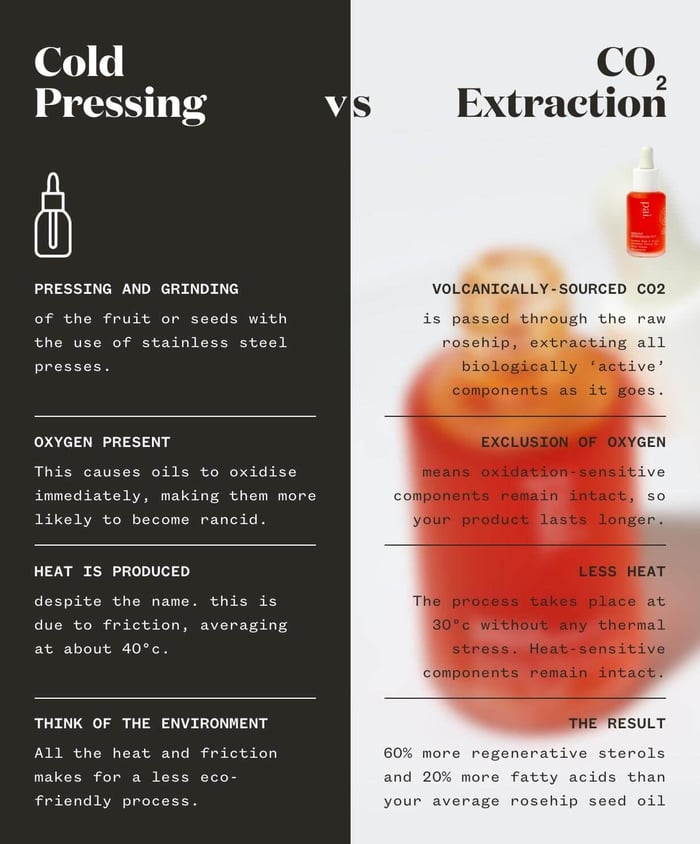
Cold-pressed oil is obtained through pressing and grinding fruit or seeds with stainless steel presses.
The raw plant material is placed between horizontal plates which are drawn together by a rotating screw (the 'expeller'), and the oil is squeezed out.
Despite the name, a certain amount of heat is produced during the process due to friction, averaging about 40°C. To be marketed as cold-pressed, the temperature must stay below 49°C.
Here's the problem: just like if we were subjected to these temperatures, delicate ingredients can end up less than 'fresh'. Many of their therapeutic properties are lost to heat degradation.
There's also oxygen present during cold-pressing. This causes oils to oxidise immediately, making them more likely to become rancid before you've had a chance to use them up.

What is CO2 extraction?
At Pai, we use Super Critical CO2 Extraction wherever more delicate ingredients are involved.
This extraction method uses volcanically-sourced CO2 in its supercritical (fluid) state. The CO2 is passed through the raw plant material, extracting all biologically 'active' components as it goes.
This process takes place at 30°C without any thermal stress and without using organic solvents. Because CO2 is chemically inert, the extraction happens in a virtual vacuum, with no oxygen present.
The difference between 30°C and 40-49°C might not sound significant, but for heat-sensitive compounds like carotenoids and polyphenols, it's the difference between preservation and degradation.
CO2 extraction vs cold-pressed
CO2 extraction is best, and the science backs this up. Oxygen-free environments and low temperatures are particularly important for fragile ingredients like rosehip.
Research published in the Brazilian Journal of Chemical Engineering confirms CO2 extraction achieves higher oil yields (6.5% vs 5.0% for cold pressing) and superior quality. A comparative study in Industrial Crops and Products (2022) showed CO2 extracts retained 92% of native beta-carotene after 6 months of storage, while cold-pressed oils lost 37% due to autoxidation.
Here's why we swear by CO2 extraction for our iconic Rosehip Bioregenerate face oil.
It maximises the ingredient benefits
By keeping temperatures low and extracting all the 'active' components, we're able to preserve and protect the complete botanical, skin-loving properties of rosehip. That means you don't lose any rosehip oil benefits.
We know this because we've tested it. Our Rosehip Bioregenerate delivers 700% more antioxidants, 65% more regenerative sterols and 20% more fatty acids than your average rosehip seed oil*.
These aren't marketing numbers. They're the result of independent third-party laboratory testing against similar market-leading rosehip oils available in Europe. Higher potency means a little goes a long way, which means it'll last longer in your bathroom cabinet.
It creates a purer product
CO2 extraction leaves absolutely no solvent residues, so the final oil is impeccably pure. This includes the incredible natural colour and smell.
You only have to see how orange, concentrated and herbaceously-scented Rosehip Bioregenerate is to witness CO2 extracts at their best. That deep orange colour isn't cosmetic. It directly reflects high concentrations of carotenoids (beta-carotene and lycopene), which are potent antioxidants involved in collagen synthesis and maintaining skin elasticity.
It's better for the environment
The low temperature and lack of waste streams or emissions make CO2 extraction an extremely environmentally-friendly process. This matters to us as a B Corp certified company. We wouldn't extract our rosehip oil any other way.
Why we extract both fruit and seed
Most rosehip oils on the market are seed-only extracts. Our Rosehip Bioregenerate is one of very few products that CO2-extracts both the rosehip fruit and the seed, combining them into a single concentrated oil.
This whole-plant approach captures a broader and more potent spectrum of bioactive compounds. Rosehip seeds are rich in polyunsaturated fatty acids (PUFAs) and sterols, while the fruit flesh contains higher concentrations of carotenoids and polyphenols. By extracting both, the oil delivers the full regenerative potential of the rosehip plant rather than just one part of it.
The science of rosehip regeneration
Rosehip (Rosa canina) is one of the most extensively researched botanical oils in dermatology. Published clinical research confirms multiple mechanisms of action:
Collagen synthesis and skin repair
Rosehip oil activates type III collagen and accelerates collagen synthesis through fibroblast stimulation. Clinical trials confirm rosehip oil treatment results in faster wound healing, improved reconstruction of collagen, and increased fibroblast proliferation (PMC review, 2024).
Skin barrier restoration
The essential fatty acid profile (omega-3, -6, and -9) reinforces the skin's natural lipid barrier, reducing transepidermal water loss. This keeps skin hydrated, resilient, and protected.
Anti-ageing and wrinkle reduction
Rosehip oil inhibits MMP-1, the enzyme responsible for breaking down collagen. Carotenoids are directly involved in maintaining skin elasticity and firmness. Clinical studies show participants using rosehip experienced noticeable increases in skin elasticity.
Brightening and evening skin tone
Antioxidants including vitamins A and E work synergistically to combat visible UV damage, reduce overproduction of melanin pigment, and fade the appearance of dark spots. For more on addressing acne scars and pigmentation, see our comprehensive guides.
Anti-inflammatory protection
Polyphenols and anthocyanin reduce inflammation, while the oil's vitamin E content provides additional anti-inflammatory protection. Research confirms antimicrobial activity against acne-causing bacteria.
Beyond Rosehip Bioregenerate
We apply the same extraction philosophy to our Light Work Rosehip Cleansing Oil. The CO2 extraction ensures the rosehip's regenerative properties remain intact even in a cleansing format, delivering skin benefits while removing makeup and impurities.
For those with particularly reactive skin, our Chamomile & Rosehip Calming Day Cream combines CO2-extracted rosehip with soothing German chamomile, creating a formula that calms while it regenerates.
Making an informed choice
Not all rosehip oils are created equal. When you see "cold-pressed rosehip oil" on a label, you're looking at an extraction method that subjects delicate compounds to heat and oxygen from the start. The oil begins degrading immediately.
CO2 extraction costs more. The equipment is specialised, the process is slower, and the yields are different. But the result is an oil that delivers measurably more of what makes rosehip special: the fatty acids that stimulate collagen production, the sterols that support skin restoration, and the polyphenols that protect against damage.
That's why every bottle of Rosehip Bioregenerate we produce uses CO2 extraction. After 15 years of formulating for sensitive skin, we've learned that the gentlest approach is often the most sophisticated.
Shop our highly potent Rosehip Oil today to see the difference it can make to your skin
*Independently tested by a third party laboratory. Data verification available on request. Tested against similar, market leading, rosehip oils available in Europe.
Frequently Asked Questions
Why isn't cold-pressed Rosehip Oil as effective as it sounds?
Despite the name, cold-pressing generates friction heat averaging 40°C (and up to 49°C while still qualifying as "cold-pressed"), which degrades delicate bioactive compounds. Oxygen is also present throughout the process, causing the oil to begin oxidising immediately, so it's more likely to go rancid before you finish the bottle.
How does CO2 extraction work, and why does Pai use it for Rosehip Oil?
CO2 supercritical extraction passes volcanically-sourced CO2 in a fluid state through raw plant material at just 30°C, in a completely oxygen-free environment. This preserves the full spectrum of bioactive compounds that heat and oxygen would otherwise destroy, which is why Pai uses it for fragile ingredients like rosehip in their Rosehip Bioregenerate Oil.
How much more potent is Rosehip Bioregenerate compared to standard rosehip seed oils?
Independent third-party lab testing shows Rosehip Bioregenerate delivers 700% more antioxidants, 65% more regenerative sterols, and 20% more fatty acids than average rosehip seed oils. These higher concentrations directly translate to more effective skin regeneration, and the potency means a little goes a long way.
How can I tell if a rosehip oil is high quality just by looking at it?
Colour is a reliable indicator. A deep orange hue reflects a high concentration of carotenoids like beta-carotene and lycopene, which are potent antioxidants involved in collagen synthesis. Pale golden rosehip oils typically indicate lower carotenoid content, often the result of cold-pressing or oxidation.
Is CO2 extraction better for the environment than cold-pressing?
Yes. CO2 extraction operates at low temperatures and produces no waste streams or emissions, making it a significantly more environmentally friendly process. The CO2 used is volcanically sourced and chemically inert, so it leaves no solvent residues in the final product either.