
How Rosehip Oil Became a Skincare Must-Have
Rosehip oil might be having its moment, but this overnight skin regenerator has centuries of history behind it. From ancient Egyptian burial sites to modern London laboratories, the journey of Rosehip BioRegenerate is a story of botanical wisdom meeting cutting-edge extraction science.
Today, we know rosehip oil as the gold standard for overnight skin regeneration. Clinical research confirms it accelerates collagen synthesis, strengthens the skin barrier, and delivers antioxidant protection that lasts. But how did this deep orange botanical extract become the hero ingredient in millions of bathroom cabinets?
Ancient Oils, Cautionary Tales
The ancient Egyptians understood something we're only now proving in laboratories: plant oils rich in polyunsaturated fatty acids have remarkable effects on skin. Burial sites and hieroglyphics reveal they used various botanical oils, typically pure extracts high in omegas.

Not all their experiments went well. The female pharaoh Hatshepsut reportedly created her own skin treatment combining palm and nutmeg oils with benzopyrene, a highly carcinogenic tar. Her quest to soothe irritated skin may have contributed to her premature death. A stark reminder that natural doesn't automatically mean safe, and that formulation expertise matters.
From Dog Bites to Vitamin Bombs
The Romans had better luck with Rosa Canina, the exact variety we use in our Rosehip BioRegenerate Oil. They discovered its healing properties treating dog bites, hence the Latin name meaning "dog rose."
Ancient Chinese medicine and Native American healing traditions also prized rosehip preparations. They used them for everything from digestive issues to muscle cramps, recognising the plant's anti-inflammatory properties long before we understood the polyphenol content driving them.
During World War II, Britain faced a citrus shortage. The solution? Rosehips. With vitamin C levels nearly 60 times higher than oranges, rosehip syrup kept scurvy at bay and immune systems functioning. Children across Britain grew up on the stuff, though few realised they were consuming one of nature's most potent antioxidant sources.
The 1980s: When Science Caught Up
Everything changed in 1983. Researchers at the University of Santiago published groundbreaking findings: rosehip seed oil could regenerate skin tissue, minimise scarring, reduce wrinkles, and even out pigmentation. The beauty industry took notice.
What the Santiago team discovered was the mechanism we now understand in detail. Rosehip oil's polyunsaturated fatty acids, particularly linoleic and alpha-linolenic acids, stimulate fibroblast activity. Fibroblasts produce collagen. More active fibroblasts mean more collagen synthesis, which translates to firmer, smoother, more resilient skin.
The oil also contains trans-retinoic acid, a natural form of vitamin A that promotes cell turnover without the irritation of synthetic retinoids. Add potent antioxidants like lycopene and beta-carotene, and you have a botanical that addresses ageing, scarring, hydration, and inflammation simultaneously.
Not All Rosehip Oils Are Created Equal

Here's where our story takes a technical turn. Most rosehip oils on the market use cold pressing. It's cheap, it's traditional, and it destroys a significant portion of the bioactive compounds that make rosehip oil effective.
Cold pressing generates heat through friction, typically reaching 40°C or higher. Heat degrades antioxidants. Oxygen exposure during pressing accelerates oxidation. By the time a cold-pressed rosehip oil reaches your bathroom shelf, it's already lost much of its regenerative potential.
We use CO2 supercritical extraction instead. Operating at 30°C in a completely sealed, oxygen-free environment, this process preserves the full spectrum of bioactive compounds. The result? Our Rosehip BioRegenerate contains up to 700% more polyphenols than premium cold-pressed alternatives. That's not marketing. That's independently verified laboratory analysis.
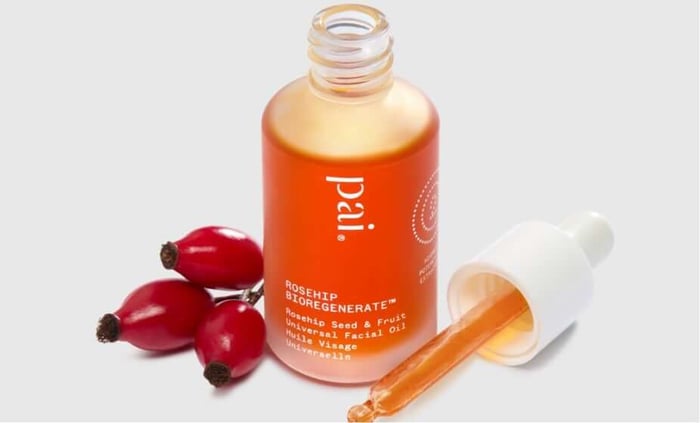
We also extract from both the fruit and the seed, not just the seed like most brands. The fruit flesh contains different compounds than the seed, particularly carotenoids that give our oil its distinctive deep orange colour. Pale golden rosehip oil might look pretty, but that colour tells you it's missing crucial regenerative compounds.
The Proof Is in the Testing
We've added our own research to rosehip's scientific legacy. In independent consumer trials, 84% of participants reported smoother skin after using Rosehip BioRegenerate. 87% saw improved hydration. 84% experienced softer skin texture.
But the numbers that matter most come from comparative testing against other rosehip oils on the market. Our formula contains 24% more polyunsaturated fatty acids than leading competitors. These are the compounds that drive skin regeneration at a cellular level. We also deliver up to 65% more sterols, which stimulate collagen synthesis and provide anti-inflammatory benefits.
This isn't about being expensive for the sake of it. CO2 extraction costs significantly more than cold pressing. But when you understand that those extra costs translate directly to measurably higher concentrations of every compound that makes rosehip oil work, the value becomes clear.
From Ancient Wisdom to Modern Innovation
The story of rosehip oil is really the story of botanical science evolution. What the Egyptians intuited, the Romans discovered by accident, and wartime Britain used for survival, we've now proven through peer-reviewed research and clinical trials.
We've sold over a million bottles of Rosehip BioRegenerate because it works. Not because we say it works, but because independent testing proves it delivers more regenerative compounds than any comparable oil tested. Because thousands of customers have seen their skin transform overnight. Because when you combine ancient botanical wisdom with modern extraction technology, you get results that speak for themselves.
That deep orange drop on your palm each night? It's carrying centuries of healing history, refined by science, delivered through technology that preserves every bioactive molecule nature intended. From pharaohs to modern laboratories, rosehip oil's journey proves that the best skincare innovations often come from understanding what nature knew all along.
Ready to experience the difference extraction technology makes? Shop Rosehip BioRegenerate here.
*4 week independent consumer trial of 97 women
**Independently tested by a third party laboratory against similar, market leading rosehip oils available in Europe. Data verification available on request.
Frequently Asked Questions
How far back does the use of rosehip oil in skincare go?
Rosehip's roots in skincare stretch back thousands of years. Ancient Egyptians used plant-based oils rich in omegas on their skin, Romans used Rosa canina (the same rosehip variety Pai uses today) to heal dog bites, and ancient Chinese doctors used rosehip preparations for various ailments. It wasn't until a 1983 study at the University of Santiago that rosehip seed oil's specific benefits for skin regeneration, scar reduction, and tone evening were formally documented, catching the beauty industry's attention.
What did the 1983 University of Santiago study find about rosehip oil?
The study showed that rosehip seed oil could regenerate skin, minimise the appearance of scars and wrinkles, and help even out skin colour and tone. This was the research that first put rosehip oil on the beauty industry's radar as a serious skincare active, rather than just a folk remedy.
What makes Pai's Rosehip Bioregenerate Oil different from other rosehip oils?
Independent third-party lab testing found it contains 700% more polyphenols (antioxidants) and 24% more polyunsaturated fatty acids than market-leading competitor rosehip oils. Those polyunsaturated fatty acids are what drive the oil's ability to regenerate skin at speed. The difference comes from Pai's CO2 supercritical extraction process and whole-plant formulation, which extracts both the fruit and seed rather than seed alone.
What results can I expect from using Rosehip Bioregenerate Oil?
In a 4-week independent consumer trial of 97 women, 84% said it made their skin feel smoother, 87% said it felt more hydrated, and 84% said it felt softer. The oil is designed to work overnight, supporting your skin's natural repair cycle to brighten, smooth, and seal in moisture.
Why are rosehips so rich in vitamin C, and what does that mean for skin?
Rosehips contain almost 60 times more vitamin C than any other citrus fruit, which is why they were even used as a citrus replacement during World War II to ward off illness. Vitamin C is a potent antioxidant that helps protect skin from oxidative damage and supports a brighter, more even complexion.