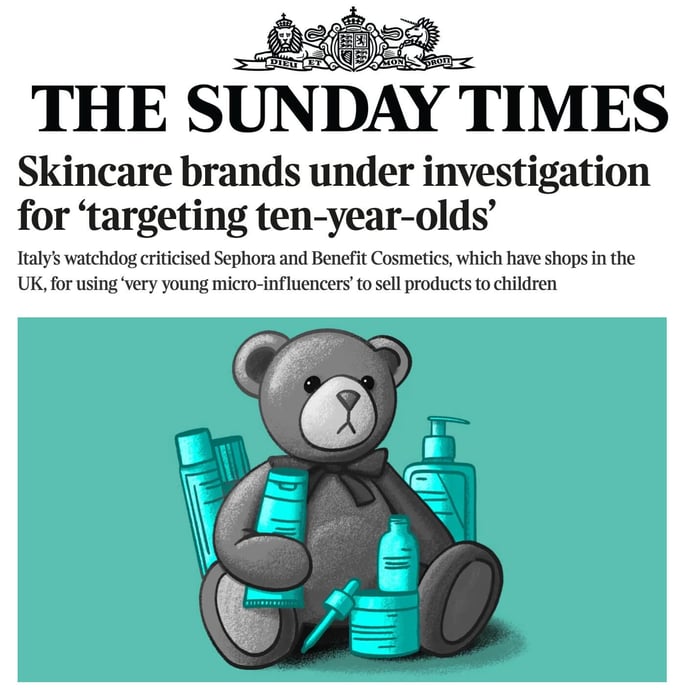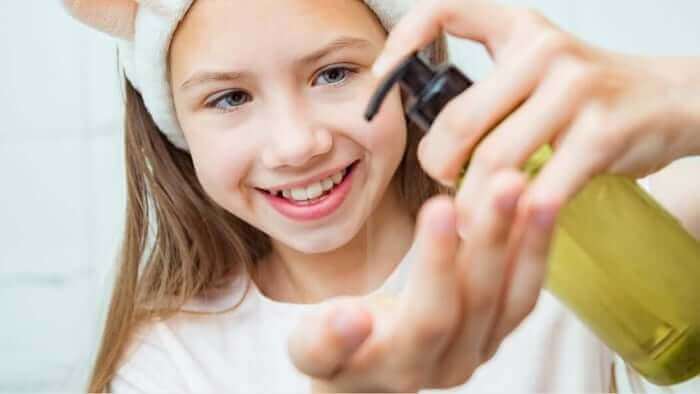

We've just discovered something that should worry every parent: more than 1 in 4 UK tweens are slathering on skincare products designed for adult skin. Retinol. AHAs. Actives their developing skin simply isn't ready for.
We commissioned a groundbreaking survey of 1,500 UK girls aged 9-12 and their parents. The results confirmed what we'd feared: young skin is being compromised by products it was never meant to handle.
Nearly half of these children have already experienced redness, itching or irritation from their skincare. The biology explains exactly why this is going wrong.
What we found should alarm every parent
The data is stark:
- 46% of tweens use multiple skincare products weekly
- 55% never check product labels
- 48.4% are already trying to fix "problem skin" that doesn't exist yet
- 58% receive skincare as gifts from well-meaning family and friends
- 41% follow influencer recommendations
With over 600,000 #retinol videos on TikTok alone, social media has fundamentally changed how young people approach skincare. Products formulated for mature skin are being marketed to children who haven't even hit puberty.
The science: why tween skin can't handle adult actives
Surveys only tell part of the story. We commissioned the first clinical study* to examine the skin microbiome across three generations: tweens, teens, and their mothers.
What we found changes everything we thought we knew about young skin. Tween skin showed dramatically lower levels of Cutibacterium acnes (C. acnes), a bacteria essential for skin barrier function. This bacteria helps produce protective oils (sebum) that shield skin from environmental damage.
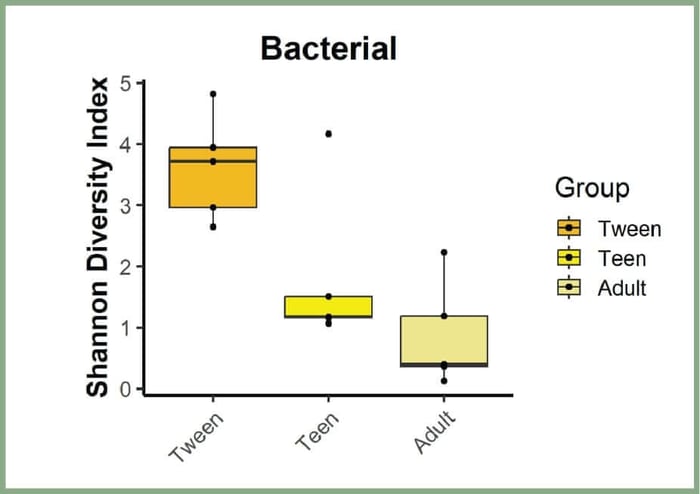
Without adequate C. acnes, tween skin lacks the natural defences that develop during puberty. Adding exfoliating acids to this immature barrier is like stripping away protection that barely exists. The result? Immediate irritation, and potentially lasting sensitivity.
Teen and adult microbiomes were remarkably similar. But tweens? Their skin is fundamentally different.
Why this hits close to home
I've lived with chronic urticaria for years. I know how a single ingredient can trigger months of sensitivity. It's why I created Pai in the first place.
Sensitive skin isn't a type. It's a scale. Anyone can tip into sensitivity, especially when using products their skin isn't ready for.
Watching children experiment with harsh actives feels particularly alarming when you understand the science. As formulators who spend our days studying skin biology and ingredient interactions, we know exactly how vulnerable young skin is.
Parents remain the strongest influence
There's hope in all this: 59.8% of tweens still turn to their families for skincare advice. Parents remain more trusted than any influencer or trend.
The problem? Most parents are navigating this blind. How do you navigate skincare conversations when the landscape has changed so dramatically? How do you explain why that viral product isn't right for young skin?
That's why we've partnered with the British Skin Foundation and Consultant Dermatologist Dr Zainab Laftah. Together, we've created the #StaySkinSHARP guide.
It's a simple framework for reading labels and understanding what belongs on young skin.
Dr Zainab Laftah explains: "The skin barrier of children aged 9-12 years is not fully developed, making it far more sensitive than adult or even teen skin. Introducing powerful active ingredients at such a young age can disrupt this barrier, leading to increased sensitivity and inflammation."
She continues: "Skincare isn't one-size-fits-all. Our skin barrier changes significantly through puberty. This is why educating both parents and tweens is more critical than ever."
What parents can do right now
Start with our #StaySkinSHARP Parental Skincare Guide. It breaks down exactly which ingredients to avoid and why.
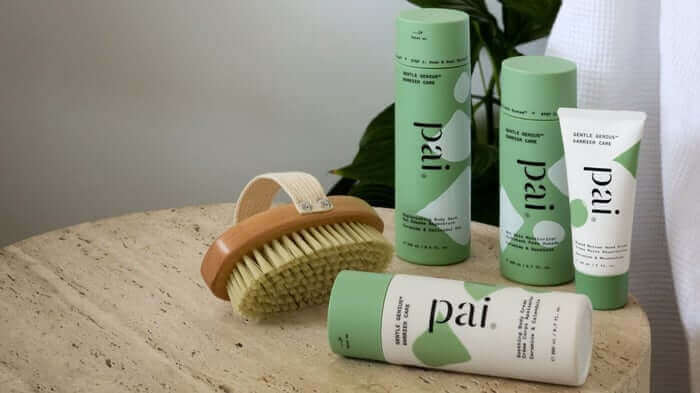
Remember: the goal isn't to ban skincare. It's to choose products that support young skin rather than stress it. A gentle cleanser and light moisturiser are all most tweens need.
If your child is already experiencing irritation or redness from their current routine, stop everything except the basics. Let their skin reset. And if symptoms persist, see a dermatologist.
The pressure to follow trends is enormous. But with the right information, parents can help their children make choices that protect their skin now and in the future.
*Indicative clinical study by Pai and HelloBiome on 15 participants
Frequently Asked Questions
What did Pai's survey find about tweens using active skincare ingredients?
Pai's survey of 1,500 UK girls aged 9-12 found that more than 1 in 4 tweens are using products containing strong actives like Retinol and AHAs. Nearly half reported experiencing redness, itching or irritation from their skincare, and 55% said they don't check product labels before use.
Why is Retinol harmful for tween skin specifically?
Pai's clinical study with HelloBiome on 15 participants found that tween skin has much lower levels of Cutibacterium acnes compared to teens and adults. This bacteria is essential for skin barrier function and sebum production, meaning tween skin is already more vulnerable. Exfoliating AHAs or retinoids dry the skin out further, potentially causing long-term damage to an already underdeveloped barrier.
What is driving tweens to use adult skincare products?
Social media plays a major role, with 41% of tweens saying they listen to influencers when choosing products, and over 600,000 TikTok videos tagged #retinol. The survey also found that 58% of tweens receive skincare products as gifts and nearly half use skincare because they want clearer, blemish-free skin.
What is the #StaySkinSHARP guide and where can I find it?
It's a free parental guide created by Pai in partnership with the British Skin Foundation and Consultant Dermatologist Dr Zainab Laftah. It helps parents, influencers and the industry navigate skincare conversations with tweens, offering a simple framework for reading labels and understanding what's suitable for young skin. You can download it from the Pai Skincare website.
Are parents still influential in their children's skincare choices?
Yes. Despite the influence of social media, Pai's survey found that 59.8% of children aged 9-12 say their families are their most trusted source of skincare advice. That's a real opportunity for parents to step in with the right information, which is exactly why Pai created the #StaySkinSHARP guide to help bridge the knowledge gap.