
Why Your Skin Hates Pancake Day (And How to Fix It)
Pancake Day is brilliant. A whole day dedicated to flipping batter into circles and calling it dinner. Your skin, unfortunately, has some thoughts.
The classic pancake recipe reads like a checklist of inflammatory triggers: refined flour, sugar, milk, more sugar. Within hours, that stack of joy can show up as congestion, redness, or that special kind of dullness that follows a sugar binge. You don't have to choose between pancakes and clear skin. You just need to understand what's happening at a cellular level.
The sugar-skin connection
When you eat refined sugar, your blood glucose spikes. This triggers a process called glycation, where sugar molecules attach to proteins like collagen and elastin. The result? Advanced glycation end products (AGEs), which sound like something from a dystopian novel but are actually just stiff, damaged proteins that make skin look dull and accelerate ageing.
Sugar also triggers insulin release, which increases sebum production and inflammation. For acne-prone skin, this is basically rolling out the red carpet for breakouts. Studies show high-glycemic diets correlate with a 30% increase in acne severity. The 30% increase isn't opinion. It's measurable biochemistry.
Why dairy makes it worse
Milk contains insulin-like growth factor 1 (IGF-1) and hormones that survived pasteurisation. These compounds stimulate oil glands and increase keratinocyte proliferation, creating the perfect conditions for blocked pores. If you've noticed spots along your jawline after a dairy-heavy meal, this is why.
The proteins in dairy (casein and whey) also trigger mTOR pathways, which sounds technical because it is. These pathways increase inflammation and oil production. For sensitive or acne-prone skin, it's like adding fuel to a fire that was already smouldering.
Building a skin-friendly pancake
The solution isn't sad, flavourless pancakes. It's understanding which swaps actually make a difference:
Instead of white flour: Use oat flour or almond flour. Lower glycemic index, more nutrients, and oats contain beta-glucan which actually helps regulate sebum production.
Instead of sugar: Mashed banana or a small amount of maple syrup. The fibre in whole fruit slows glucose absorption, preventing the inflammatory spike.
Instead of dairy milk: Oat milk or almond milk. No hormones, no IGF-1, no mTOR activation.
Add anti-inflammatories: A teaspoon of cinnamon isn't just for flavour. It helps regulate blood sugar and contains antimicrobial compounds. Ground flaxseed adds omega-3s, which actively reduce skin inflammation.
The morning-after protocol
Even with the best intentions, sometimes you end up eating traditional pancakes. Here's how to minimise the skin fallout:
Hydrate properly: Sugar dehydrates skin at a cellular level. Drink more water than you think you need.
Support your skin barrier: Use a ceramide-rich moisturiser like The Anthemis. When inflammation is high, your barrier needs extra support.
Add antioxidants: Both internally (green tea, berries) and topically. Our Rosehip Bioregenerate delivers trans-retinoic acid to help neutralise inflammation.
Don't overreact: One inflammatory meal won't ruin your skin. It's the pattern that matters. Treat your skin gently for the next few days and let it rebalance.
A recipe that works
Since we're here, this is my go-to pancake formula that keeps both my tastebuds and my rosacea happy:
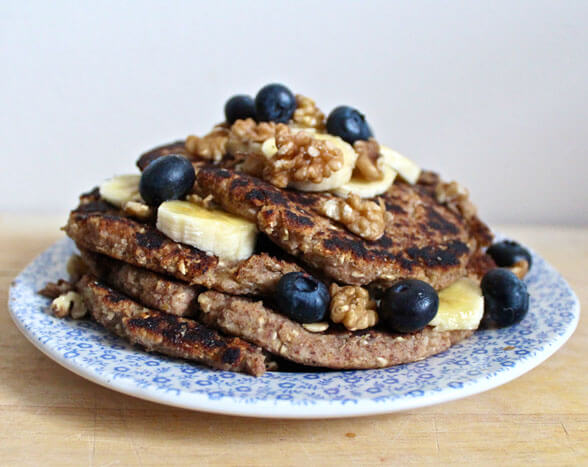
Blend 1 cup oat flour (just blitz oats in a processor), 2/3 cup ground almonds, 1 mashed banana, 1 cup oat milk, 2 tablespoons ground flaxseed, 1 teaspoon cinnamon, and a pinch of salt. The batter should be thick but pourable.
Cook in coconut oil (medium heat, don't let it smoke). Top with berries and a drizzle of maple syrup. The whole thing takes 10 minutes and doesn't require a skin recovery plan.
The bigger picture
Understanding the diet-skin connection isn't about restriction or guilt. It's about making informed choices. Some days, you'll choose the traditional pancakes because they're worth it. Other days, you'll make the swaps because clear skin is the priority. Both choices are valid.
What matters is knowing the why behind the reaction. When you understand that sugar triggers glycation, that dairy activates inflammatory pathways, that your skin is responding to internal chemistry, you can make decisions based on knowledge rather than fear.
And sometimes, honestly, the pancakes are worth the extra skincare steps. That's fine too. Just remember to show your skin some extra love afterwards.
For more on managing diet-related skin reactions, or to understand how inflammation shows up in sensitive skin, check out our other guides.