
Most skincare brands slap 'adaptogenic mushrooms' on the label and call it a day. We spent two years identifying which specific compounds in which mushrooms actually calm inflamed skin.
Our Tri-Mushroom 10% contains equal parts Reishi, Chaga and Cordyceps. Each mushroom targets a different inflammatory pathway. When skin flares up, it's rarely just one thing going wrong. It's a cascade. That's why we built redundancy into the formula.
The science of mushroom adaptogens in skincare
When your skin gets stressed (UV exposure, harsh products, hormonal shifts, temperature changes), cells called keratinocytes start releasing inflammatory signals. These signals have names like TNF-alpha, IL-6, and IL-8. They're the molecular equivalent of pulling the fire alarm.
Once that alarm goes off, visible redness follows. Irritation. Over time, those same inflammatory signals break down collagen and elastin. This is why chronically inflamed skin ages faster. It's not just uncomfortable. It's destructive.
Adaptogenic mushrooms have been used in East Asian medicine for over 2,000 years specifically because they modulate stress responses rather than suppressing them. Published research now confirms that Reishi, Chaga and Cordyceps each contain distinct bioactive compounds that intervene in inflammatory pathways through different mechanisms.
All three mushrooms in our formula are naturally rich in the amino acid L-glutamine. Published studies show glutamine directly inhibits NF-kappaB signalling, the master switch controlling pro-inflammatory genes (PMID: 17543437). It also supports your skin's glutathione antioxidant system and suppresses inflammatory proteins like TNF-alpha, IL-6 and IL-1beta (PMID: 39367233).
Think of it this way: if inflammation is a multi-lane motorway, each mushroom blocks a different lane. Even if one route stays open, the overall traffic slows down.
What makes each mushroom unique
Reishi targets ageing at the source
Reishi contains two major classes of compounds: polysaccharides (beta-glucans) and ganoderic acids (triterpenoids). Research in Biomedical Dermatology (2019) confirms these compounds deliver anti-inflammatory, anti-melanogenesis, anti-ageing, and barrier repair activity. The ganoderic acids specifically suppress inflammatory cytokines through the NF-kappaB pathway (PMID: 24948193).
In one published case study, topical Reishi produced near-complete regression of inflammatory lesions within 3 days (PMC4799037). While a single case has limitations, it demonstrates the extract's rapid anti-inflammatory potential.
Chaga rebuilds your barrier
Chaga is one of the richest natural sources of superoxide dismutase (SOD), an antioxidant so powerful your body makes its own version. It also contains beta-glucans, polyphenols, melanin, and betulinic acid from the birch trees it grows on.
Published research confirms Chaga delivers anti-inflammatory, antioxidant and barrier restoration properties (PMC11132974). The polysaccharides modulate NF-kappaB activity in keratinocytes, while betulinic acid suppresses inflammatory pathways in barrier-compromised skin.
Cordyceps provides cellular energy
Cordyceps contains cordycepin, a nucleoside that boosts cellular energy production. A double-blind, placebo-controlled trial (40 subjects, 28 days) found Cordyceps extract boosted ATP in skin cells by 68%, reduced reactive oxygen species by 30%, increased collagen production by 69% in vitro, and delivered a 28% reduction in wrinkles (PMC11049886).
Cordyceps also inhibits skin pathogenic bacteria including S. aureus, P. aeruginosa and C. acnes (PMC9030010). So while it's calming inflammation, it's also creating an environment where problem bacteria can't thrive.
Why we culture our mushroom cells in-house
We don't forage our mushrooms from ancient forests or import them from mountain caves. We grow them. In our London lab. In controlled conditions.
Lab-cultured mushroom cells deliver standardised concentrations of the compounds that matter: ganoderic acids, cordycepin, beta-glucans. Wild mushrooms vary in potency depending on rainfall, soil conditions, harvest time. Our cultured cells deliver the same concentration of actives in every batch.
It's also better for the planet. Wild Chaga takes 5-7 years to mature on birch trees. Cordyceps in nature grows on caterpillar larvae at high altitude. By culturing cells, we get higher potency extracts without touching natural ecosystems.
How to use mushroom skincare (it's simpler than you think)
Most mushroom skincare dilutes the extract across complex formulas to fractional percentages.
Our Tri-Mushroom 10% delivers 10% total mushroom extract concentration. That's significantly higher than you'll find in any multi-ingredient moisturiser. Because it's a booster, you control exactly where it goes.
Add 1-2 drops to your current moisturiser, serum or face oil. Mix and apply as normal. Or use it neat on clean skin before your other products. The lightweight serum texture absorbs instantly.
For maximum calming power, pair it with our other targeted boosters. The mushrooms calm inflammation in the moment. Other actives in your routine can build long-term resilience to prevent future flare-ups.
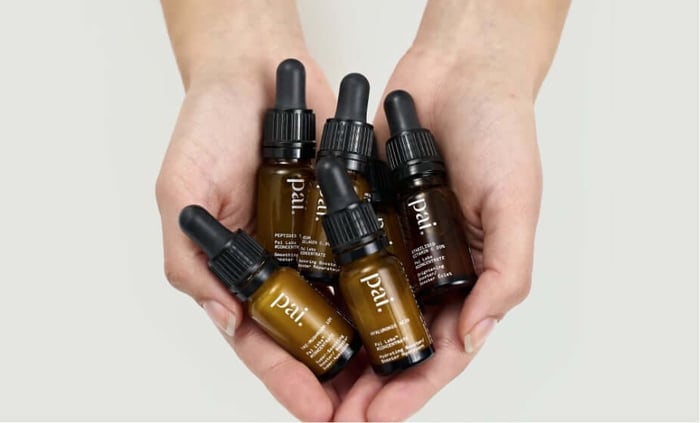
The bottom line on mushrooms in skincare
Mushrooms aren't a trend. They're a different approach to calming skin that's backed by centuries of traditional use and modern clinical evidence.
While other calming ingredients target single pathways, our tri-mushroom blend provides three distinct anti-inflammatory mechanisms. Lab-cultured cells ensure consistent potency. The concentrated booster format means you get clinical levels of actives, not marketing sprinkles.
The result? Skin that's less reactive today and more resilient tomorrow. No wellness mysticism. Just molecular mechanisms doing their job.
Ready to add mushrooms to your routine? Shop our Tri-Mushroom 10% now, or book a free consultation with our skin experts for personalised advice on calming reactive skin.
Frequently Asked Questions
What do mushrooms actually do for your skin?
Mushrooms have been used in East Asian medicine for centuries thanks to their adaptogenic properties, and in skincare they deliver a surprisingly broad range of benefits. They calm visibly irritated skin, provide antioxidant protection, help reduce the appearance of fine lines, brighten dull complexions, and support barrier function.
How does the glutamine in mushrooms help with inflammation?
Mushrooms are naturally rich in the amino acid glutamine, which downregulates inflammatory pathways when applied topically. Published research confirms that glutamine directly inhibits NF-kappaB signalling (the master switch controlling pro-inflammatory gene expression) and suppresses cytokines like TNF-alpha, IL-6, and IL-1beta. This makes mushroom extracts particularly useful if your skin is stressed, reactive, or prone to flare-ups.
How do I add mushroom skincare into my existing routine?
You don't need to overhaul anything. Pai's Tri-Mushroom Super-Soothing Booster is designed to slot straight in: add 1-2 drops to your moisturiser, serum, or face oil, or apply it neat onto dry cleansed skin before the rest of your routine. It works morning and evening.
Which mushroom species are used in skincare, and what makes each one different?
The three standouts are Reishi, Chaga, and Cordyceps, each targeting a different arm of the skin's stress response. Reishi contains ganoderic acids that modulate inflammation and help reduce fine lines from chronic skin stress. Chaga is one of the richest natural sources of superoxide dismutase (SOD) and works to restore the skin barrier, while Cordyceps contains cordycepin, which boosts cellular energy and has shown a 28% wrinkle reduction in a 40-person, double-blind clinical trial over 28 days.
Can mushroom skincare be used on sensitive skin?
Mushroom extracts are a strong choice for sensitive skin because they work as adaptogens, modulating your skin's stress response rather than suppressing it. Pai's Tri-Mushroom Booster is 96-hour patch tested for tolerance on reactive skin, is free from fragrance and essential oils, and is certified COSMOS Natural. If you want antioxidant protection but find vitamin C too intense for your skin, mushroom-based formulas offer a gentler alternative.