
Stretch marks form when skin stretches faster than its elastic fibres can adapt. Whether they appeared during pregnancy, a growth spurt, or rapid weight change, many people want to prevent new ones forming, and the science shows this is possible.
Prevention requires two specific mechanisms: deep lipid conditioning and sustained hydration. You don't need multiple products to address both.
The biology of stretch marks
Stretch marks form when your dermis (the middle layer of skin) expands beyond its elastic capacity. When skin stretches rapidly, collagen and elastin fibres in the dermis rupture under mechanical stress.
When this happens, the body repairs these micro-tears with scar tissue, creating the characteristic lines we call striae distensae. Fresh stretch marks appear pink, red, or purple because blood vessels show through the thinned dermis. Over time, they fade to silvery white as the blood vessels contract and scar tissue matures.
This can happen during puberty (growth spurts), pregnancy (rapid abdominal expansion), or significant weight change in either direction. Hormonal shifts compound the problem. During pregnancy, elevated corticosteroids reduce collagen synthesis. Mechanical stress combines with reduced collagen synthesis, making skin more prone to tearing.

Can you actually prevent stretch marks?
Around 70% of pregnant women develop stretch marks. Genetics influence susceptibility, but they don't determine outcome. The key is supporting your skin's structural integrity before it's pushed to breaking point.
Prevention focuses on two mechanisms: keeping the dermis conditioned with lipids that support collagen production, and maintaining hydration to preserve elasticity. Standard moisturisers don't address the specific mechanisms involved. It's about delivering specific compounds that address what's happening at a cellular level.
The dual approach: why cream AND oil matter
Most stretch mark products are single formulations trying to do everything. But prevention requires both deep lipid conditioning (best delivered through oils) and sustained hydration (best delivered through water-based emulsions). This approach separates these functions deliberately.
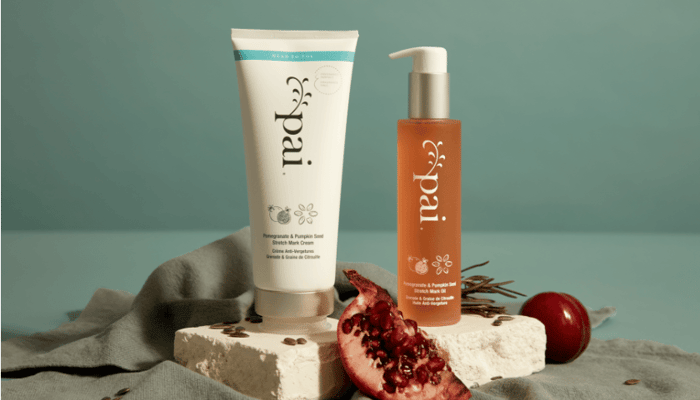
The evening oil delivers concentrated fatty acids and antioxidants while skin repairs overnight. Camellia oil (our lead carrier) has been shown to induce collagen synthesis and suppress MMP-1, the enzyme that breaks collagen down. Pumpkin seed oil provides phytosterols that stimulate fibroblast activity. The morning cream maintains hydration during the day when skin is under mechanical stress.
The key active: punicic acid
Pomegranate seed oil contains punicic acid, an omega-5 fatty acid that inhibits collagenase and elastase. These are the specific enzymes responsible for breaking down collagen and elastin during stretch mark formation.
A clinical study using pomegranate seed oil on 20 volunteers with existing stretch marks showed remarkable results after 6 weeks: dermis thickness increased by 14.85%, elasticity improved by 9.75%, and hydration jumped by 30.32%. The stretch marks became less defined and less depressed.
We use CO2-extracted pomegranate seed oil, not cold-pressed. CO2 extraction preserves heat-sensitive compounds like punicic acid at concentrations cold pressing can't achieve. It's more expensive, but the bioactive preservation is worth it.
Pregnancy and essential oil safety
Most stretch mark products contain essential oils with pregnancy safety concerns. Lavender, neroli, frankincense, sweet orange. They're also contraindicated in various trimesters.
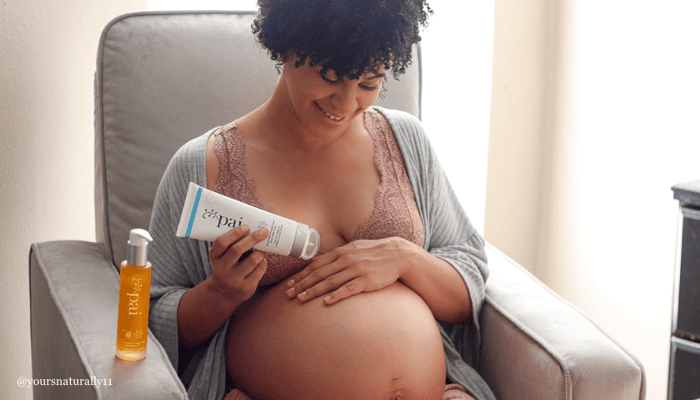
Our products contain zero essential oils and zero fragrance. We formulated without essential oils because pregnancy safety shouldn't involve guesswork. Both products are safe from first trimester through breastfeeding.
Beyond topical: supporting skin from within
Moisturising is half the equation. The other half happens at the dining table.
Skin needs raw materials to maintain its structure under stress. Vitamin C drives collagen synthesis. Vitamin E protects against oxidative damage. Essential fatty acids (particularly omega-3 and omega-6) support barrier function and reduce inflammation. During pregnancy or any period of rapid body change, these become even more critical.
Water matters too. Dehydrated skin loses elasticity faster than hydrated skin. These fundamentals matter more during periods of rapid skin change. Drink water. Eat foods rich in vitamins A, C, and E. Include fatty fish, nuts, seeds, and colourful vegetables. Your skin reflects what you feed it.
What about existing stretch marks?
Fresh stretch marks (still pink or purple) respond better to treatment than mature ones. The same ingredients that prevent stretch marks can improve newer ones: fatty acids to support repair, antioxidants to reduce inflammation, and compounds that stimulate collagen production.
For older, silvery stretch marks, improvement is limited but not impossible. Consistent use of oils rich in regenerative compounds can improve texture and reduce the depression. They won't disappear, but they can become less noticeable.
Worth noting: many clinical treatments for stretch marks (laser therapy, microneedling, prescription options) aren't suitable during pregnancy or breastfeeding. Natural topical care remains the safest option during these periods.
The truth about stretch mark prevention
No product can guarantee you won't get stretch marks. But you can significantly reduce their likelihood and severity by understanding what causes them and addressing those mechanisms directly.
Start early. Be consistent. Use products with evidence-backed actives, not just nice textures and marketing claims. And remember that stretch marks, if they do appear, are proof your body did something extraordinary. Support your skin through the journey, but don't let fear of marks overshadow the experience itself.
Support your skin with evidence-backed ingredients, then trust the process.
Frequently Asked Questions
What actually causes stretch marks to form?
Stretch marks form when your dermis (the middle layer of skin) expands faster than its collagen and elastin fibres can handle, causing them to rupture under mechanical stress. Your body repairs these micro-tears with scar tissue, creating the characteristic lines that start pink or purple and fade to silvery white over time. Hormonal shifts, like elevated corticosteroids during pregnancy, compound the problem by reducing collagen synthesis.
Why do you need both an oil and a cream to prevent stretch marks?
Prevention requires two distinct mechanisms: deep lipid conditioning to support collagen production, and sustained hydration to preserve elasticity. Oils deliver concentrated fatty acids and antioxidants for overnight repair, while water-based creams maintain hydration during the day when skin is under mechanical stress. A single product trying to do both compromises on each.
What makes punicic acid effective against stretch marks?
Punicic acid, an omega-5 fatty acid found in pomegranate seed oil, inhibits collagenase and elastase, the specific enzymes responsible for breaking down collagen and elastin during stretch mark formation. A clinical study on 20 volunteers with existing stretch marks showed that after 6 weeks, dermis thickness increased by 14.85%, elasticity improved by 9.75%, and hydration jumped by 30.32%. CO2 extraction preserves punicic acid at concentrations cold pressing can't achieve.
Are stretch mark oils safe to use during pregnancy?
Many stretch mark products contain essential oils like lavender, neroli, and frankincense that are contraindicated during various trimesters. Pai's stretch mark products contain zero essential oils and zero fragrance, making them safe from the first trimester through breastfeeding. Clinical treatments like laser therapy and microneedling also aren't suitable during pregnancy, so natural topical care with pregnancy-safe formulations is the safest option.
Can you improve stretch marks that have already formed?
Fresh stretch marks (still pink or purple) respond better to treatment than mature silvery ones. The same ingredients that prevent stretch marks, fatty acids, antioxidants, and collagen-stimulating compounds, can improve newer marks. For older stretch marks, consistent use of regenerative oils can improve texture and reduce the depression, though they won't disappear completely.