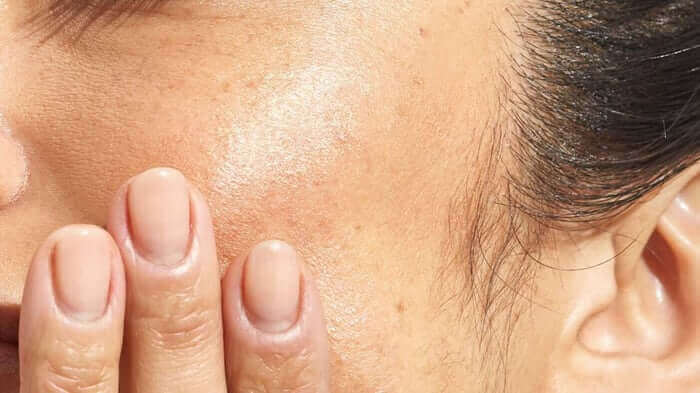

Your skin is having a moment. One day it's fine, the next it's angry red patches. Tightness where there wasn't any. Products that normally work suddenly sting.
You're not imagining it. When we surveyed our community last month, 98% said their skin feels more reactive in winter. That's virtually everyone.
Cold air holds less moisture, indoor heating creates desert conditions, and your skin's oil production slows right down. Together, they compromise your barrier function. The invisible shield that keeps moisture in and irritants out starts to fail. Even skin that's normally bulletproof can suddenly feel raw.
(Want the full science on winter barrier damage? Our winter skincare guide goes deep.)
Most people miss this completely.
Sensitive skin vs sensitised skin (and why it matters)
Reactive skin comes in two distinct types.
Sensitive skin is what you're born with. It's genetic, determined by variations in genes like FLG that control barrier protein production. Triggers include stress, hormones, certain foods, illness. It's a permanent companion you learn to manage.
Sensitised skin is what happens to you. It's temporary, caused by environment (hello, British winter) or overdoing it with actives. Your barrier gets damaged, everything stings, but that's fixable with the right approach.
Most people right now? Sensitised. You can fix it.
What you told us is happening to your skin
When we asked what winter does to your complexion, the patterns were clear:
52% of you: bone-dry skin that drinks moisturiser and asks for more
38%: flaking patches that makeup clings to
28%: redness that wasn't there in September
23%: spots appearing alongside the dryness (the worst of both worlds)
19%: everything just looks grey and tired
Your solutions? Most of you pile on heavier creams. Smart ones (21%) add facial oil to seal everything in. Almost nobody reduces their actives, which would actually help more than anything else.
Barrier repair needs specific ingredients, not just heavier formulas. It's the right ingredients doing the right job.
The ingredients that actually repair winter damage
Chamomile (but make it CO2)
Most brands use chamomile. Not everyone extracts it properly.
Most brands use steam-distilled chamomile essential oil. The heat destroys matricin, chamomile's most potent anti-inflammatory compound. What's left is nice enough, but nowhere near as powerful as the plant itself.
We use CO2 extraction. No heat, no oxygen, just pure pressure that preserves everything: matricin, bisabolol, flavonoids, the lot. The result is so concentrated it's visibly darker than standard extracts. One study found CO2-extracted chamomile is 40% more anti-inflammatory than the dried flower version.
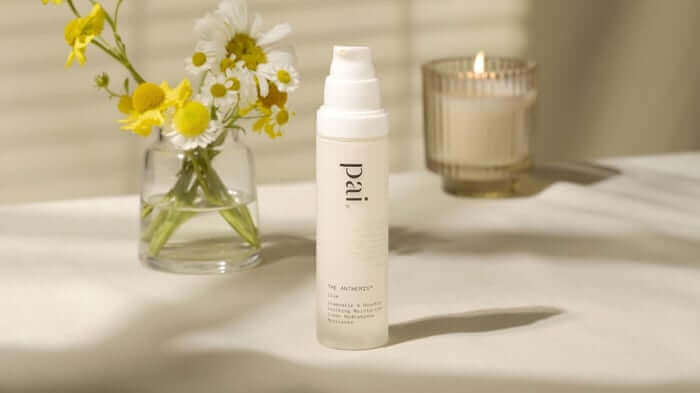
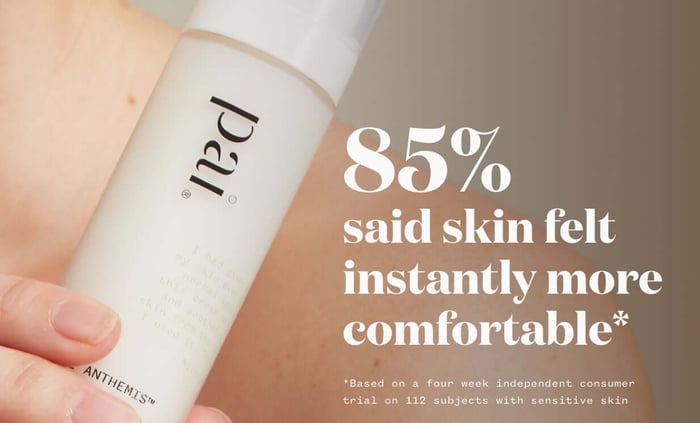
You'll find it doing the heavy lifting in The Anthemis. In trials, 84% said their skin felt instantly soothed. After 4 weeks, 80% saw visible redness reduction.
Rosehip (CO2-extracted, naturally)
Rosehip rebuilds what winter breaks down. The omegas 3, 6, 7, and 9 are exactly what your barrier needs to repair itself. They're like scaffolding for damaged skin.
Cold-pressed rosehip is adequate, but CO2 extraction preserves more. Cold pressing still generates heat (up to 49°C) and exposes the oil to oxygen. By the time it reaches you, it's already started oxidising.
CO2 extraction happens at 30°C in a sealed environment. No oxygen, no degradation. Independent testing shows our Rosehip Bioregenerate contains 700% more antioxidants than cold-pressed versions. That deep orange colour? That's what intact carotenoids look like.
Ceramides
Ceramides are the mortar between your skin cells. When they're depleted (by age, stress, or weather), gaps appear. Water escapes. Irritants get in. Everything hurts.
We source ours from wheat seeds because the molecular structure matches human ceramides almost exactly. Your skin recognises them, slots them into place, and the barrier starts working again.
Find them in The Light Fantastic and Instant Kalmer. Both brilliant for emergency barrier repair.
The routine that actually works
Fixing sensitised skin isn't complicated. It's about being systematic.
Morning:
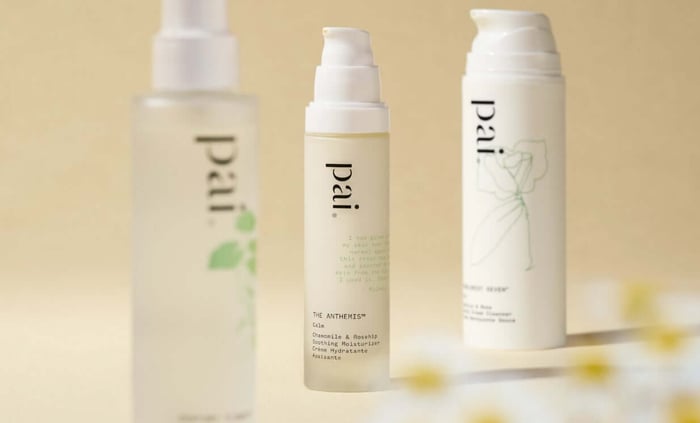
Cleanse gently with Middlemist Seven. No foam, no tightness, just clean.
Spritz Century Flower Barrier Defence Mist. The prebiotic inulin rebalances your skin's microbiome.
Moisturise with The Anthemis. Instant calm, 24-hour hydration.
Always British Summer Time SPF30. Yes, even in December. UV damage doesn't take winters off.
Evening:
Same cleanser, same mist.
If you're properly irritated, add Instant Kalmer before moisturising.
Finish with Rosehip Bioregenerate. While you sleep, it rebuilds.
The principle is consistency. Sensitised skin doesn't want variety. It wants the same gentle routine every day until it recovers. Save the actives for spring.
When to worry (and when not to)
Temporary sensitivity usually fixes itself in 2-4 weeks with the right care. Keep it simple, avoid triggers, let your barrier rebuild.
But if you're seeing persistent inflammation, spreading rashes, or reactions to everything including water, that's beyond sensitised. That's genuinely sensitive skin asserting itself, and it's worth seeing a dermatologist.
Most of you are just experiencing winter in Britain with skin that wasn't designed for central heating. Give it what it needs and it'll calm down.
Shop our complete Calm collection here. Everything's formulated specifically for reactive skin, which in January is basically all of us.
Still unsure what your skin actually needs? Book a free consultation with our experts. They've seen every type of winter skin meltdown. They'll sort you out.
Frequently Asked Questions
What is the difference between sensitive skin and sensitised skin?
Sensitive skin is usually genetic and triggered by stress, illness or allergies, while sensitised skin is temporary and caused by external factors like weather or reactions to skincare products. Sensitised skin occurs when the barrier has been physically damaged, leaving it irritated, uncomfortable, itchy or inflamed. It's very common in winter, even for people who don't normally consider their skin sensitive.
Why does skin feel more sensitive and reactive during winter?
Cold weather, extreme temperatures and central heating all weaken the skin's natural barrier function, which is responsible for holding moisture in and keeping irritants out. Your skin's natural oil production also drops in winter, compounding the problem. In Pai's survey, 98% of respondents said their skin feels more sensitive during the colder months.
Why does Pai use CO2 extracted chamomile instead of chamomile essential oil?
CO2 extraction preserves chamomile's most potent anti-inflammatory compound, matricin, which is destroyed by the heat of steam distillation. The process also retains antioxidant flavonoids, bisabolol and bisabolol oxides at highly concentrated levels. This is why Pai's bestselling moisturiser The Anthemis, built around CO2 extracted chamomile, is clinically proven to soothe skin and provide up to 24 hours of hydration.
How do ceramides help repair a damaged skin barrier in winter?
Ceramides are lipids naturally present in your skin that form the "mortar" between skin cells, but they become depleted with age and when skin is under stress. Replenishing them reinforces the moisture barrier against dehydration and irritation, thanks to their omega 3, 6 and 9 content. The Instant Kalmer Ceramide Serum delivers three specific plant-derived ceramide types that are structurally matched to human skin ceramides, so your skin can recognise and integrate them into its barrier.
What is a good skincare routine for sensitised winter skin?
Start simple with a gentle cleanse using Middlemist Seven Cream Cleanser followed by The Anthemis Soothing Moisturiser for instant calm. Once skin settles, layer in Century Flower Barrier Defence Mist before moisturising to hydrate and support your skin's microbiome with prebiotic inulin. At night, swap your moisturiser for Rosehip Bioregenerate Oil to lock in moisture and deliver concentrated barrier-supporting omegas while you sleep.