
When your skin reacts to everything
Reactive and hypersensitive skin feels like it's constantly on high alert. One day a product works fine, the next your skin's throwing a full-scale protest.
This unpredictability isn't just frustrating. It's exhausting. But understanding what's happening beneath the surface can help you build a routine that actually calms things down.
What makes skin hypersensitive?
Hypersensitive skin has a compromised barrier function. Think of your skin barrier as a brick wall, with skin cells as the bricks and lipids (including ceramides) as the mortar holding everything together. In reactive skin, that mortar is crumbling, letting irritants slip through while moisture escapes.
The result? Your skin overreacts to triggers that healthy skin would shrug off. Fragrance, preservatives, even temperature changes can set off redness, stinging, itching, or burning sensations.
Several conditions fall under the hypersensitive umbrella:
- Rosacea (particularly facial rosacea)
- Atopic dermatitis (eczema)
- Contact dermatitis
- Urticaria (hives)
- Psoriasis
- Perioral dermatitis
Each presents differently, but they share that same fundamental issue: a barrier that's not doing its job.
Ingredients that calm the chaos
When your skin's in reactive mode, you need ingredients that work on multiple fronts. Here's what actually helps:
Chamomile: nature's firefighter
Not all chamomile extracts are created equal. German chamomile contains azulene, a bright blue compound with serious anti-inflammatory credentials. It doesn't just mask redness, it actively calms the inflammatory cascade happening in reactive skin.
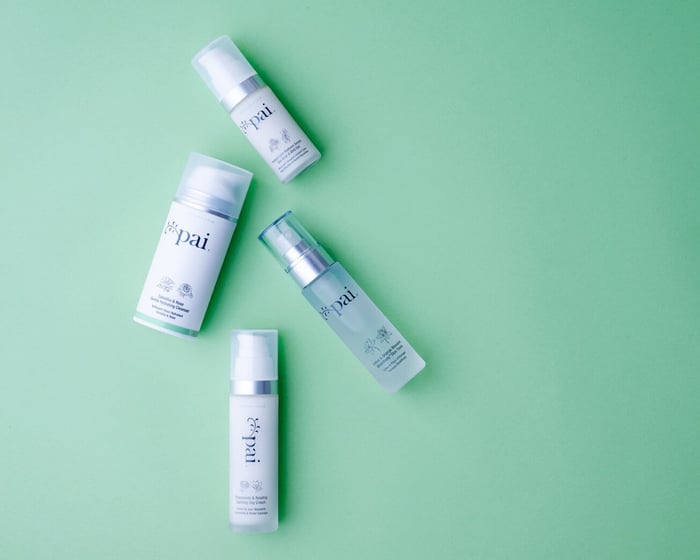
Our The Anthemis uses CO2-extracted German chamomile, which preserves more of these active compounds than traditional extraction methods.
Rosehip: the repair specialist
Rosehip oil earned its reputation for good reason. Its naturally occurring trans-retinoic acid (a form of vitamin A) helps normalize skin cell turnover without the irritation of synthetic retinoids. The omega fatty acids, particularly omega-3 and omega-6, help rebuild that compromised barrier.
Our Rosehip BioRegenerate uses CO2 supercritical extraction, delivering 700% more antioxidants than cold-pressed versions. For reactive skin, that translates to faster healing and less inflammation.
Your irritant blacklist
Reading ingredient lists becomes second nature when you have reactive skin. Here are the usual suspects to avoid:
Detergents that strip your defences
Sodium Lauryl Sulphate (SLS), Sodium Laureth Sulphate (SLES), Cocamidopropyl Betaine, and Ammonium Laureth Sulphate might make products foam beautifully, but they dissolve the lipids your skin desperately needs. The result? More dryness, more reactions, more misery.
Switch to oil-based cleansers that remove makeup and dirt without disrupting your barrier.
Alcohol: the false friend
Alcohol denat (denatured alcohol) shows up in toners and serums promising to mattify or refresh. What it actually does is evaporate quickly, taking your skin's moisture with it. For reactive skin, that's like throwing petrol on a fire.
Parfum: the mystery irritant
The beauty industry won't tell you this, but 'parfum' on an ingredient list can hide up to 200 different chemicals. Phthalates, synthetic musks, preservatives, all bundled under one innocent-looking word. For hypersensitive skin, it's Russian roulette in a bottle.
Building a routine that won't backfire
Less really is more when your skin's reactive. Here's how to build a routine that calms rather than provokes:
Morning: protection mode
Cleanse gently (lukewarm water alone might be enough), apply a barrier-supporting moisturiser, then mineral SPF. That's it. Save the actives for when your skin's stable.
Evening: repair mode
Remove SPF and makeup with an oil cleanser, pat skin dry (never rub), then layer a few drops of rosehip oil under your moisturiser. The oil provides extra barrier support overnight when your skin does its heavy repair work.
The patch test protocol
New product? Patch test behind your ear or on your inner wrist for 48 hours. No reaction there doesn't guarantee your face will cooperate, but it's a good first filter. When you do try something new, introduce one product at a time with at least a week between additions.
Beyond topical: supporting sensitive skin from within
Your skin reflects your internal state. These systemic approaches can make a real difference:
Essential fatty acids
Omega-3 and omega-6 fatty acids are literally the building blocks of healthy cell membranes. They're also natural anti-inflammatories. Load up on oily fish, flaxseeds, and walnuts, or consider a quality supplement.
Identify your triggers
Keep a skin diary for a month. Note what you eat, stress levels, sleep quality, products used, and how your skin behaves. Patterns emerge. Maybe dairy sets you off, or your skin hates central heating. Once you spot the patterns, you can actually do something about them.
The stress connection
Cortisol, your stress hormone, directly impacts skin barrier function. That's why managing stress is actual skincare, not just self-care marketing. Regular sleep, movement you enjoy, and saying no to overcommitment all count as skincare.
When DIY isn't enough
Sometimes reactive skin needs professional intervention. See a dermatologist if you experience severe symptoms, reactions that spread or worsen, or if you've tried everything and nothing helps. They can prescribe treatments that aren't available over the counter and run tests to identify specific allergens.
Remember, hypersensitive skin isn't a life sentence. With the right approach, most people find their skin becomes more resilient over time. Start with barrier repair, eliminate known irritants, and be patient. Your skin didn't become reactive overnight, and it won't heal overnight either.
Ready to start? Check out our guides on managing eczema, dealing with acne on sensitive skin, and transitioning to natural skincare.