
Good SPF should be boring. Non-negotiable. As automatic as brushing your teeth. Yet if you have sensitive skin, finding a sunscreen that doesn't sting, break you out, or leave you looking like a Victorian ghost is anything but straightforward.
The solution isn't to skip protection. UV exposure drives everything from dark spots to collagen breakdown, and that's before we get to the serious stuff. The solution is understanding why most sunscreens upset reactive skin, and knowing exactly what to look for instead.
Why SPF matters every single day
Here's what UV rays do to unprotected skin: they penetrate deep into the dermis, fragment collagen fibres, trigger melanin overproduction, and generate free radicals that accelerate every visible sign of ageing. This happens on cloudy days. It happens through windows. It happens in winter.
For sensitive skin, the damage goes deeper. UV exposure weakens an already fragile barrier, making skin more reactive to everything else. It's a vicious cycle: you need protection most when your skin tolerates it least.
That's why daily broad-spectrum SPF isn't optional. It's the single most effective anti-ageing product you can use. More effective than retinol. More effective than vitamin C. More effective than any serum or cream. Because preventing damage beats repairing it every time.
The difference between UVA, UVB, and SPF ratings
SPF measures UVB protection only. SPF 30 means your skin takes 30 times longer to burn than without protection. But burning is just one type of damage.
UVA rays penetrate deeper than UVB. They're the ones behind premature ageing, dark spots, and that leathery texture that makes people guess your age wrong. In the UK, UVA protection is shown with a star rating (aim for 4-5 stars) or the letters "UVA" in a circle, which means it meets EU standards. The NHS recommends at least four-star UVA protection as standard.
Modern formulas go further. Blue light from screens and daylight penetrates even deeper than UV, triggering hyperpigmentation and oxidative stress. The best sunscreens now protect against the full light spectrum, not just UV.
Physical vs chemical filters: what actually works for sensitive skin
Chemical (synthetic) sunscreens absorb UV rays and convert them to heat inside your skin. That heat triggers inflammation, which is why chemical filters often sting, burn, or cause breakouts on reactive skin.
Physical (mineral) sunscreens work differently. Minerals like zinc oxide and titanium dioxide sit on the skin's surface, reflecting and scattering UV rays away. No heat generation. No inflammatory response. That's why dermatologists recommend mineral formulas for sensitive, rosacea-prone, and eczema-prone skin.
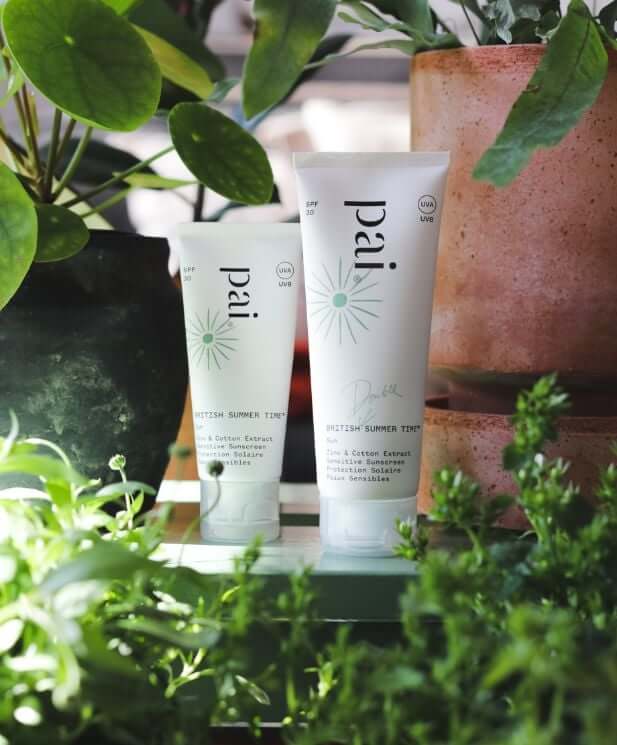
Our British Summer Time SPF 30 and British Summer Time Glow SPF 30 both use non-nano zinc oxide as their primary filter. The particles are large enough to stay on the skin's surface (genuinely reef-safe), but formulated to minimise white cast.
Ingredients to avoid if you have sensitive skin
Chemical UV filters are the obvious ones. Oxybenzone and octinoxate are known irritants and potential hormone disruptors. They're also the filters Hawaii and other regions have banned for coral reef damage. Cinnamates (anything ending in -cinnamate), benzophenones, and avobenzone are other common triggers.
But filters aren't the only problem. Fragrance gets added for that "beachy" scent but can trigger contact dermatitis. Alcohol (often listed as alcohol denat.) helps formulas dry quickly but strips the skin's barrier. Preservatives like methylisothiazolinone are necessary in water-based formulas but are common allergens.
The easiest way to avoid all of these? Choose a mineral formula with minimal ingredients, certified by a third party. Our SPF collection is COSMOS Natural certified, which means every ingredient has been vetted for safety and environmental impact.
The case for tinted SPF (it's not just vanity)
Here's something most people don't know: the iron oxides that create tint in mineral sunscreens are themselves photoprotective. They block visible light, particularly the high-energy blue wavelengths that drive hyperpigmentation.
Research shows tinted mineral sunscreens are measurably better at preventing melasma and age spots than non-tinted versions. The tint isn't cosmetic. It's functional.
British Summer Time Glow SPF 30 combines zinc oxide with iron oxides and reflective minerals. You get broad-spectrum UV protection, visible light defence, and a radiant finish that works as primer. For anyone dealing with hyperpigmentation or who just wants to streamline their morning routine, it's the smarter choice.

After sun: repair the damage you couldn't prevent
Even with perfect SPF application, some UV gets through. Your skin needs help recovering, especially if it's already sensitive.
Skip the traditional after-sun products. Most are loaded with alcohol for that cooling sensation, which actually increases dehydration and barrier damage. Look for genuinely hydrating formulas with barrier-repair ingredients like ceramides, fatty acids, and humectants.
Post-sun skin needs moisture replenishment (UV exposure increases transepidermal water loss), antioxidants to neutralise free radical damage, and soothing anti-inflammatories. Our approach: layer hydrating serums under a rich moisturiser, then seal with a few drops of face oil.
Your daily SPF routine
SPF goes on last in your morning routine, after moisturiser but before makeup. Apply at least 15 minutes before sun exposure to let the formula set properly.
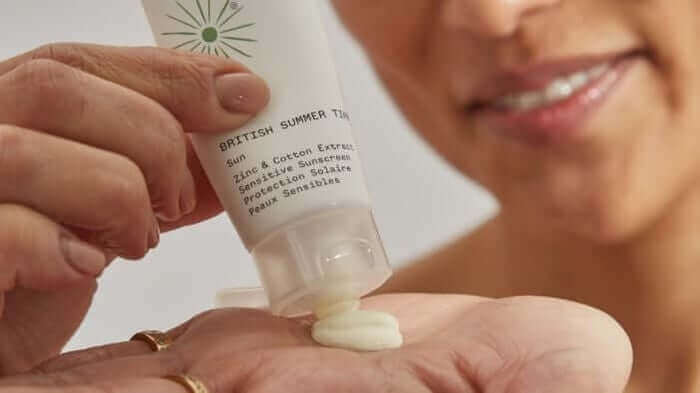
The amount matters. Most people use a quarter of what they should. For your face and neck, you need two finger-lengths of product. Yes, it seems like a lot. That's because it is a lot. Anything less and you're not getting the protection on the label.
Layer your skincare thoughtfully. Start with The Anthemis Chamomile Calming Moisturiser for a hydrating base that won't pill under SPF. If you're using British Summer Time Glow, you can add a drop of The Impossible Glow Bronzing Drops to your moisturiser for extra radiance.
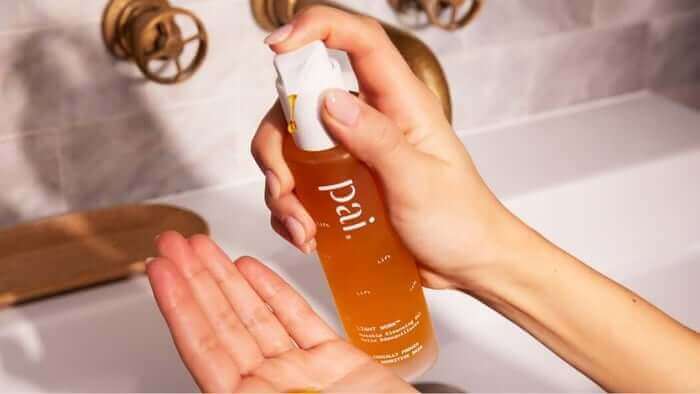
Come evening, SPF requires proper removal. Mineral sunscreen is designed to stick, which means your regular cleanser might not cut it. Start with Light Work Rosehip Cleansing Oil to dissolve the SPF and makeup, then follow with Middlemist Seven Gentle Cream Cleanser for a proper double cleanse. Use the included Dual-Effect Face Cloth to ensure every trace is gone without scrubbing your skin raw.
The bottom line on SPF for sensitive skin
Finding the right sunscreen when your skin reacts to everything isn't about luck. It's about understanding the science. Mineral filters reflect rather than absorb. Fewer ingredients mean fewer potential triggers. Third-party certification means someone else has done the vetting for you.
Most importantly, the best SPF is the one you'll actually use. Every day. Rain or shine. If it pills, stings, or leaves you looking ghostly, you won't wear it. If it feels like skincare and happens to protect you from the primary cause of skin ageing, you will.
That's what we designed our sunscreens to be: boring, in the best possible way. Protection you don't have to think about. Because SPF should be the least complicated part of your routine.
Shop our mineral sunscreens for sensitive skin now
Frequently Asked Questions
Why are mineral sunscreens generally better for sensitive skin than chemical ones?
Mineral (physical) sunscreens use ingredients like zinc oxide to form a barrier on the skin's surface that reflects UV rays, rather than absorbing them and converting them to heat the way chemical filters do. That heat conversion process can trigger inflammation in reactive skin types. Common chemical filters like oxybenzone and octinoxate are also known to cause skin reactions in people prone to eczema and rosacea, making mineral formulas the safer choice for sensitive skin.
What's the difference between UVA and UVB protection in sunscreen?
UVB rays cause burning, while UVA rays drive premature ageing, dark spots and deeper structural damage. The SPF number on a sunscreen refers specifically to UVB protection, so you also need to check for a UVA rating; look for at least four stars or the "UVA" in a circle symbol, which confirms it meets the EU standard. A broad-spectrum formula covering both is essential for full protection.
How does British Summer Time Glow SPF 30 protect against blue light as well as UV?
The iron oxides that give BST Glow its natural tint are functional photoprotective pigments, not just cosmetic colour. Combined with zinc oxide and titanium dioxide, they block up to 86% of high-energy visible (HEV) blue light, which standard mineral sunscreens don't fully cover. This makes it a two-in-one product: broad-spectrum sun protection and a luminous, skin-perfecting finish in a single step.
How should I apply and remove sunscreen for sensitive skin?
Apply SPF as the last step of your morning skincare routine, at least 15 minutes before sun exposure, using two fingertip-sized amounts to cover your whole face. In the evening, double cleanse to remove it thoroughly: start with an oil cleanser like Light Work Rosehip Cleansing Oil to dissolve the mineral filters, then follow with a gentle cream cleanser like Middlemist Seven and its muslin cloth to lift away every trace without stripping your skin.
Which ingredients should I avoid in sunscreen if my skin is reactive?
Steer clear of chemical UV filters including oxybenzone, octinoxate, cinnamates (anything ending in -cinnamate), avobenzone, and benzophenones. Added fragrance is another common culprit, often included for that "beachy" scent but a frequent trigger for sensitive skin. Choosing a certified mineral sunscreen, like a COSMOS-certified formula, is the simplest way to avoid these ingredients entirely and know the product has been independently patch tested.